
VA launched a foreclosure rescue before planning how to measure it
A new GAO report says the agency has useful metrics but no comprehensive evaluation plan for a five-year program meant to keep veterans in their homes and cut taxpayer losses.
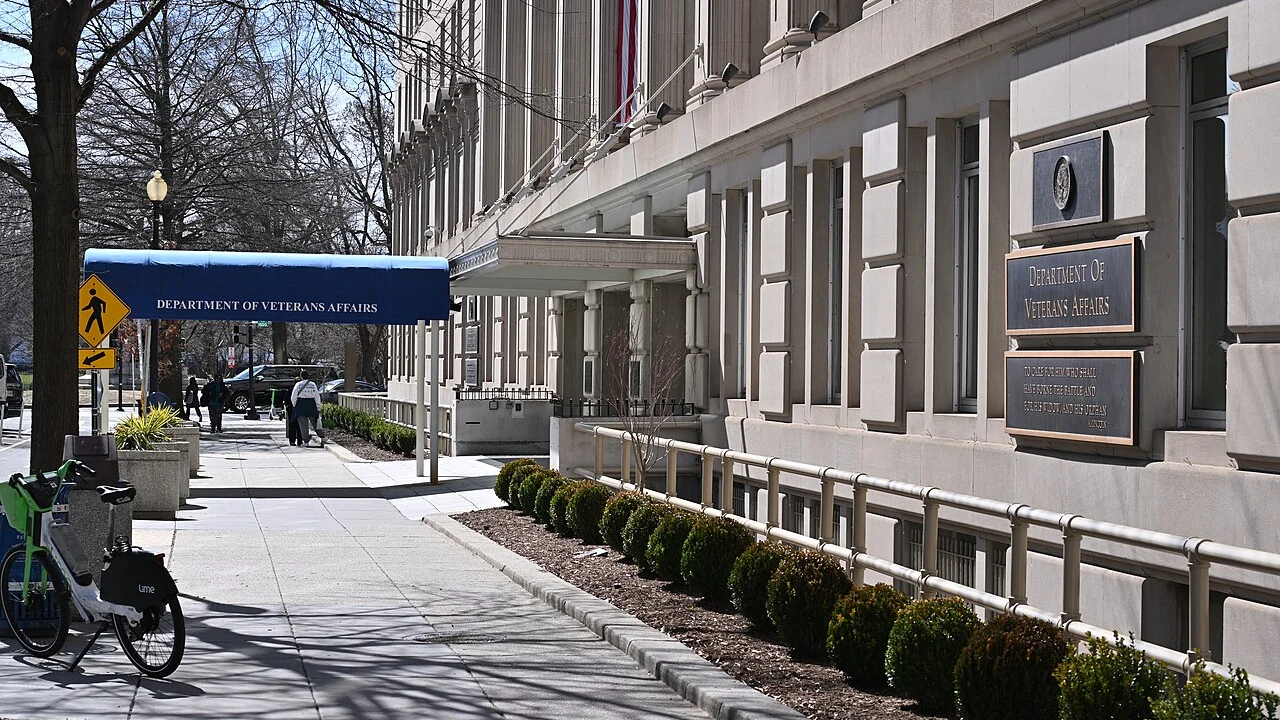
The Department of Veterans Affairs made a new foreclosure-avoidance program effective June 15 without first completing a plan to determine whether it works. A Government Accountability Office report released November 10 found that VA has useful metrics in mind, but not a comprehensive evaluation design capable of isolating the program’s effects or answering major design questions before Congress must decide whether to keep it.
The Partial Claim Program can bring an eligible borrower current without changing the interest rate on the existing mortgage. VA reimburses the loan servicer for missed payments and certain fees; the borrower repays that interest-free amount when the home is sold or refinanced, the mortgage is paid off or the loan matures. VA’s borrower page says a servicer determines eligibility and the borrower generally must complete a three-month trial payment plan.
The timing makes the evaluation gap consequential. Servicers have until November 28 to begin offering partial claims, and VA told GAO that remaining data-system changes are expected by January 2027. Yet officials said they do not plan to begin analyzing program trends and outcomes until December 2027. The program expires July 30, 2030 unless Congress reauthorizes it.
VA does plan to count approvals and denials, trial-plan completions, repayments and refinancing effects, and redefaults after 6, 12, 18 and 24 months. It also plans to use a default-resolution rate across all of its loss-mitigation tools. GAO found that those measures, while useful, cannot by themselves separate the partial-claim program from other influences; the broader rate can even count delinquencies that resolve without any loss-mitigation intervention.
The agency may also be missing data needed to learn who benefits. GAO found that VA’s Loan Guaranty Service does not keep historical borrower-characteristic data that could support the evaluation, though another VA office holds some such information. Waiting for outcomes before deciding what data and comparison methods are needed risks producing an answer too late—or an answer too weak—to guide reauthorization.
The stakes are concrete but should not be confused with proof about a program still being implemented. GAO said more than 9,000 homes with VA-guaranteed mortgages were foreclosed in 2025, before this program began. It also cited Congressional Budget Office projections that the new option could reduce VA’s default-related costs by $294 million and produce a $170 million net reduction in direct spending from 2025 through 2035. Those are projections, not realized savings.
The strongest contrary evidence is that VA has done substantial implementation work and chose a phased launch to get help to borrowers sooner. GAO found that VA issued policies, sought stakeholder feedback, trained staff and servicers, designed oversight and post-audit procedures, and changed documentation and payment systems after tracking and paperwork problems in a temporary pandemic-era program. VA said there is not yet enough outcome data to measure results. GAO agreed that results cannot be assessed yet, but said that does not prevent VA from designing the evaluation and data collection in advance.
GAO also identified design questions that VA is not planning to test. Eight of the 10 lenders, servicers, trade groups and consumer or veteran advocates GAO interviewed said the statutory limit of one partial claim per loan may disadvantage VA borrowers compared with borrowers in other federal programs. Six of the 10 said combining a partial claim with a loan modification could help. That was a small, purposive sample and cannot be generalized to all stakeholders.
Congress shares responsibility for those limits. VA told GAO that the 2025 law does not generally authorize multiple partial claims or a partial claim combined with a modification. But GAO said VA can still study those designs and report whether Congress should change the law. Counting only the options Congress permitted would leave the reauthorization debate without evidence about alternatives the statute excluded.
VA did not provide comments on GAO’s report. The record does not show that the Partial Claim Program is failing; it shows that VA launched a potentially valuable, time-limited intervention without the comprehensive evaluation plan needed to learn credibly from it. The accountable next step is specific: define comparison methods, secure borrower data, test design choices and set a reporting timetable early enough for veterans, taxpayers and Congress to act before 2030.
The evidence record
Source claimGAO published and publicly released the report November 10, 2026, and found VA lacked a comprehensive evaluation plan.
Article paragraphs: 1, 4, 5, 10
Source claimProgram mechanics, borrower eligibility process and trial payment plan.
Article paragraph: 2
Source claimProgram effective date, phased implementation, Nov. 28 deadline, January 2027 system work, December 2027 planned analysis and July 2030 authorization end.
Article paragraphs: 1, 3, 7
Source claimPlanned metrics cannot isolate program effects; collective default-resolution rate may include self-resolving delinquencies; borrower-history data gap.
Article paragraphs: 4, 5
Source claimMore than 9,000 2025 foreclosures and CBO cost projections.
Article paragraph: 6
Source claimVA implementation work, phased-rollout rationale and prior-program lessons.
Article paragraph: 7
Source claimStakeholder sample results on multiple claims and combined modifications, and VA’s statutory-authority explanation.
Article paragraphs: 8, 9
AnalysisEvaluation timing can leave VA and Congress without timely credible evidence for improvement and reauthorization.
Article paragraphs: 3, 5, 10
GAO expressly links early planning, data collection and credible results to the program’s July 2030 expiration. The article narrows that finding to the risk of late or weak evidence and does not judge program outcomes.
AnalysisCongress shares responsibility for statutory design limits and could use VA evaluation to consider changes.
Article paragraph: 9
GAO records VA’s view that the statute generally withholds authority for the two designs and states VA can evaluate them and communicate findings to Congress.
Sources and access
Each source record identifies its reporting origin, access scope and the date we checked it.
Veteran Lending: Early Planning Is Critical to Assessing VA’s New Foreclosure Avoidance Program
U.S. Government Accountability Office · Checked November 11, 2026
- Recorded relationship
- original
- Origin
- U.S. Government Accountability Office
- Access
- Full text
- Locator
- Report date and highlights; implementation discussion; evaluation findings at report sections on phased implementation and VA’s planned approach; Appendix I.
- Source publication
- November 10, 2026
Primary oversight report and fresh news hook. GAO assessed VA plans against OMB evaluation standards and interviewed a nongeneralizable sample of 10 organizations.
VA help to avoid foreclosure
U.S. Department of Veterans Affairs · Checked November 11, 2026
- Recorded relationship
- original
- Origin
- U.S. Department of Veterans Affairs
- Access
- Full text
- Locator
- Partial Claim section: current borrower guidance, trial payment plan, servicer eligibility decision and November 28 implementation deadline.
- Source publication
- September 23, 2026
Current official borrower guidance; used for mechanics, not for outcome claims.
VA launches partial claim program to help Veterans avoid home foreclosure
U.S. Department of Veterans Affairs · Checked November 11, 2026
- Recorded relationship
- original
- Origin
- U.S. Department of Veterans Affairs
- Access
- Full text
- Locator
- June 15 launch announcement: program mechanics, interest-free repayment trigger and VA’s stated rationale.
- Source publication
- June 15, 2026
Official launch account and agency rationale; not independent evidence of program outcomes.
Front Veterans Administration Building Washington DC
Wikimedia Commons · Checked November 11, 2026
- Recorded relationship
- original
- Origin
- G. Edward Johnson / Wikimedia Commons
- Access
- Full text
- Locator
- File summary and licensing sections: March 10, 2025, own work, CC BY 4.0.
- Source publication
- March 10, 2025
Conventional archival photograph used for institutional context; not evidence of program operations.

Prepared with AI research and writing tools. Sources, evidence and independent review are listed below. Public Rot is responsible for the published account.
Revision record
Revision 1 · November 11, 2026
Initial publication.
These are the recorded publication notices. Open reader tools, full available revisions or report a possible error →