
Trump Declined a Year of Nuclear Limits. Now He Wants China at the Table.
The White House and Kremlin say a Shenzhen meeting is planned, but China has not publicly matched that confirmation—and the administration has not disclosed an interim cap, verification plan or fallback if Beijing stays out.
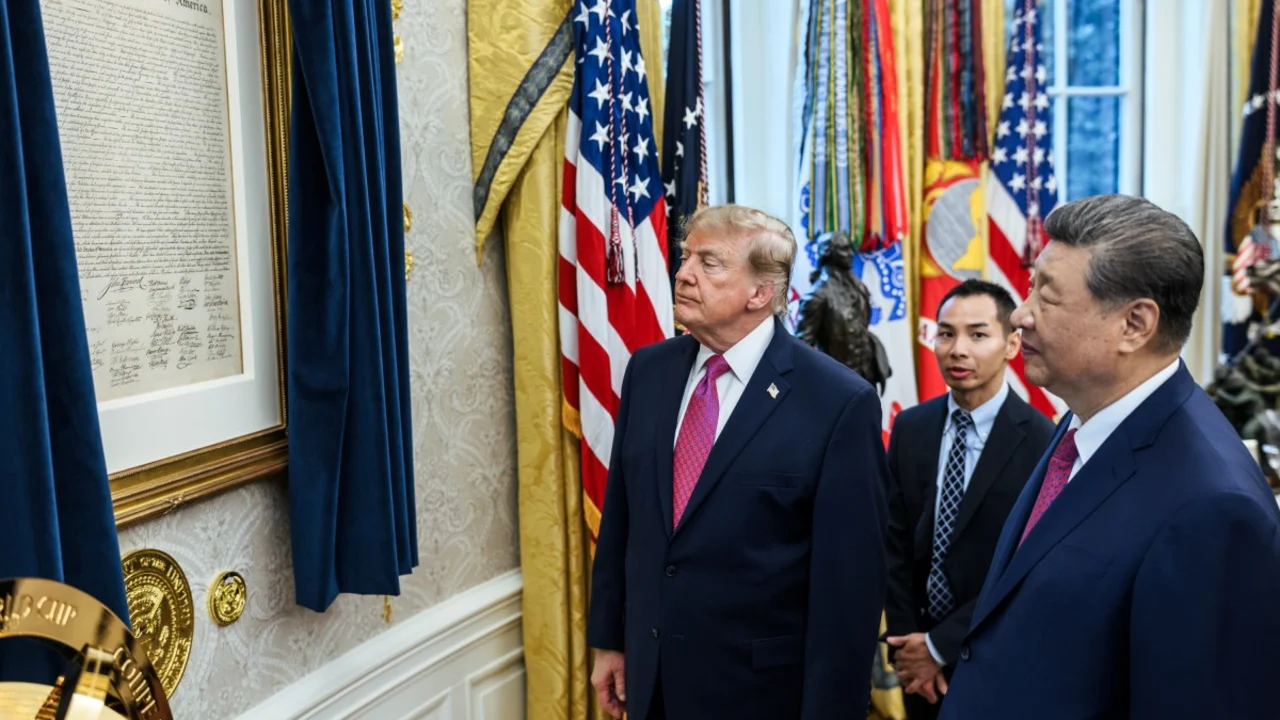
The White House and Kremlin say Donald Trump, Vladimir Putin and Xi Jinping plan to meet Thursday during the Asia-Pacific Economic Cooperation gathering in Shenzhen. China’s latest public foreign-ministry material reviewed by Public Rot has not separately confirmed the trilateral, and the agenda and format remain unsettled.
The most consequential item advertised for the possible meeting is not diplomatic pageantry. It is what, if anything, will replace the last binding limits on the world’s two largest nuclear arsenals.
New START expired in February after its one permitted five-year extension. The treaty itself could not legally be extended again. But Putin had proposed a separate step: Russia and the United States would voluntarily observe its central deployment ceilings for another year while negotiating what came next. The Trump administration declined that offer.
Trump says he wants a new and modernized framework that includes China. Including a growing third arsenal is a legitimate objective. The unanswered accountability question is what protects the public while the harder three-party negotiation is attempted.
The expired treaty capped each side at 1,550 accountable deployed strategic warheads, 700 deployed intercontinental missiles, submarine-launched missiles and nuclear-capable heavy bombers, and 800 deployed and non-deployed launchers and bombers. It also created verification and data exchanges, although Russia suspended important parts of that system in 2023.
China argues that its much smaller arsenal makes a three-way framework premature. SIPRI estimated that the United States and Russia together held 83 percent of the world’s stockpiled warheads at the start of 2026, while China’s arsenal was growing faster than any other country’s.
The administration has proposed P5 ballistic-missile launch notifications and nuclear crisis communications; CRS reported in July that the measures had not gained consensus, and they would not cap arsenals or verify compliance with deployment ceilings. Publicly available administration materials reviewed by Public Rot do not state whether Washington is voluntarily holding to the expired ceilings, what verification it would accept before a successor treaty exists, what benchmark it seeks from Beijing or what fallback applies if China refuses to join. A leader-level conversation can reduce miscalculation. It does not answer those questions.
Current reporting says Washington does not expect an agreement from the meeting. China’s Nov. 13 APEC announcement said Xi would hold bilateral meetings with foreign leaders, while the foreign ministry said it remained in communication with relevant parties about the three-way session and would release further information.
If Trump declined a one-year bridge because he wanted a stronger deal, the administration should identify the bridge, the destination and the safety rail between them. Until it does, a summit announcement is an opening—not an arms-control achievement.
The evidence record
Source claimThe White House and Kremlin announced plans for a Nov. 19 meeting, while China’s public statements stopped short of matching that confirmation.
Article paragraph: 1
AnalysisThe meeting’s advertised nuclear subject bears on the absence of binding U.S.-Russia limits.
Article paragraph: 2
AP and Reuters identify nuclear arms as an agenda item; the official U.S. record establishes New START’s expiration.
Source claimNew START expired after its permitted extension, and the administration declined voluntary adherence to the central limits.
Article paragraph: 3
AnalysisA China-inclusive objective does not resolve what interim restraint applies.
Article paragraph: 4
The reviewed U.S. statement seeks a broader framework, while the reviewed public materials do not identify an interim cap or fallback.
Source claimNew START’s central limits and verification structure.
Article paragraph: 5
Source claimThe United States and Russia hold most stockpiled warheads while China’s arsenal is growing rapidly.
Article paragraph: 6
AnalysisThe reviewed administration materials do not identify interim U.S. ceilings, verification principles, benchmarks or a fallback.
Article paragraph: 7
Bounded review of the listed current U.S. official statement and meeting reporting found the broader negotiating objective but no such public interim framework; leader dialogue can still reduce miscalculation.
Source claimNo agreement is expected, and China’s latest public statements remain noncommittal about the trilateral.
Article paragraph: 8
AnalysisA summit announcement is an opening rather than an arms-control achievement without disclosed interim guardrails.
Article paragraph: 9
The meeting is planned, no agreement is expected, and the reviewed public materials do not identify interim ceilings, verification or fallback measures.
Source claimThe administration proposed P5 launch notifications and nuclear crisis communications, but the measures had not gained consensus and would not cap arsenals or verify deployment ceilings.
Article paragraph: 7
Sources and access
Each source record identifies its reporting origin, access scope and the date we checked it.
Trump, Xi and Putin plan an unprecedented joint meeting
Associated Press · Checked November 15, 2026
- Recorded relationship
- original
- Origin
- Associated Press
- Access
- Full text
- Locator
- Nov. 14 dateline; opening and nuclear-agenda sections.
- Source publication
- November 14, 2026
AP reports the White House and Kremlin confirmations, expected nuclear discussion and low expectations for an agreement.
New Yalta? Trump-Putin push meeting that Xi is wary of hosting
Reuters · Checked November 15, 2026
- Recorded relationship
- original
- Origin
- Reuters
- Access
- Full text
- Locator
- Nov. 14 report on unsettled agenda/format, nuclear subject and China’s position.
- Source publication
- November 14, 2026
Foreign Ministry Spokesperson Mao Ning’s Regular Press Conference on November 13, 2026
Ministry of Foreign Affairs of the People’s Republic of China · Checked November 15, 2026
- Recorded relationship
- original
- Origin
- Ministry of Foreign Affairs of the People’s Republic of China
- Access
- Full text
- Locator
- Nov. 13 Q&A on the potential trilateral meeting.
- Source publication
- November 13, 2026
China said it was communicating with relevant parties and would release further information.
Xi Jinping to Attend the 33rd APEC Economic Leaders’ Meeting and Related Events
Ministry of Foreign Affairs of the People’s Republic of China · Checked November 15, 2026
- Recorded relationship
- original
- Origin
- Ministry of Foreign Affairs of the People’s Republic of China
- Access
- Full text
- Locator
- Official Nov. 13 APEC announcement and bilateral-meeting language.
- Source publication
- November 13, 2026
New START Treaty
U.S. Department of State · Checked November 15, 2026
- Recorded relationship
- original
- Origin
- U.S. Department of State
- Access
- Full text
- Locator
- Treaty duration, central limits and verification overview.
Archived official State Department description of New START.
U.S. statement to the Conference on Disarmament
United Nations Digital Library · Checked November 15, 2026
- Recorded relationship
- original
- Origin
- United Nations Digital Library
- Access
- Full text
- Locator
- March 5 U.S. statement on treaty expiration and the call for a new framework.
- Source publication
- March 5, 2026
SIPRI Yearbook 2026 nuclear weapons assessment
Stockholm International Peace Research Institute · Checked November 15, 2026
- Recorded relationship
- original
- Origin
- Stockholm International Peace Research Institute
- Access
- Full text
- Locator
- 2026 inventory overview and China growth assessment.
- Source publication
- June 15, 2026
Nuclear Risk Reduction: Executive Branch Policies and Congressional Approaches in the 119th Congress
Congressional Research Service · Checked November 15, 2026
- Recorded relationship
- syndicated
- Origin
- Congressional Research Service
- Access
- Full text
- Locator
- Executive Branch Policies section on proposed P5 launch notifications and crisis communications and the absence of consensus.
- Source publication
- July 24, 2026
Accessed through a text mirror of CRS product IN12717; the official CRS PDF origin is recorded.
Prepared with AI research and writing tools. Sources and evidence are listed below. Public Rot is responsible for the published account.
Revision record
Revision 1 · November 15, 2026
Initial publication.
These are the recorded publication notices. Open reader tools, full available revisions or report a possible error →