
Trump ordered DOJ to investigate Democrats after they promised oversight
The president called impeachment threats and donor-record demands criminal. The cited record includes aggressive political language, but no confirmed DOJ case or identified offense.
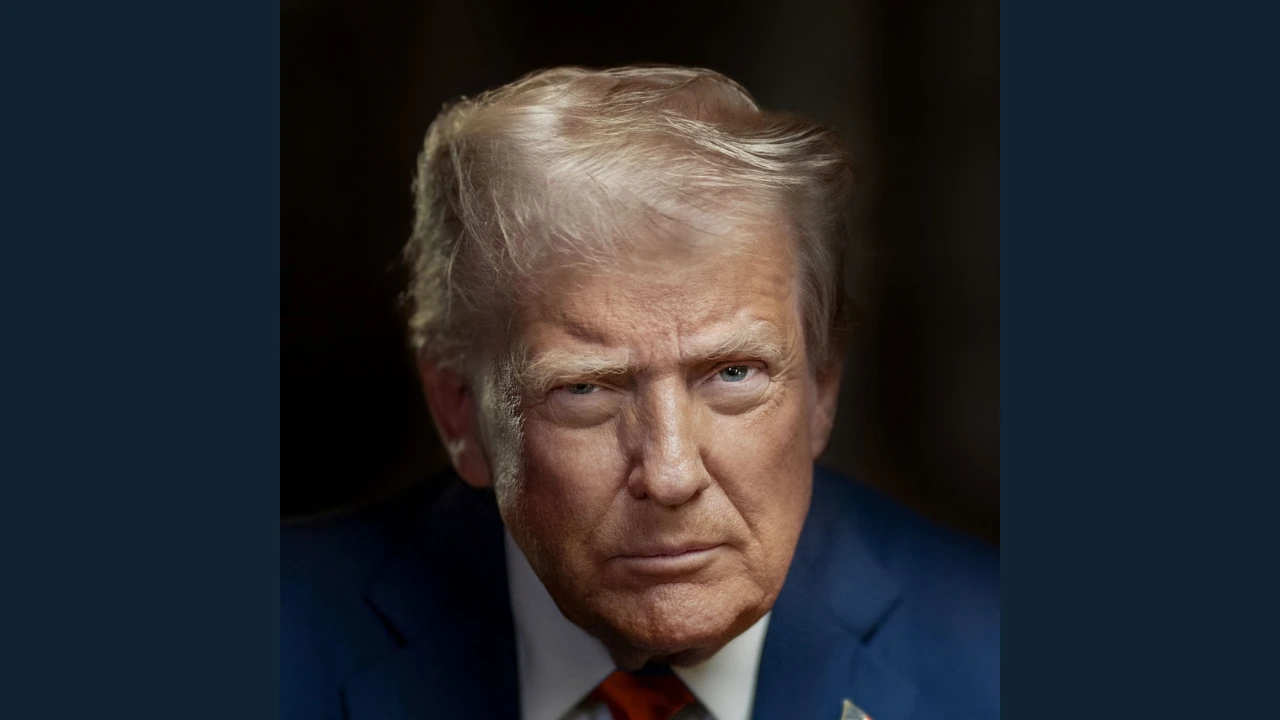
President Donald Trump publicly ordered the Justice Department on November 7 to investigate Democrats for what he called criminal threats against administration officials, Republican donors and prospective government employees. The order followed Democratic victories that will give the party control of Congress in January and the power to conduct hearings and investigations.
The immediate accountability question is whether the president is directing federal criminal-enforcement power at political opponents for promising oversight. Trump’s post called impeachment threats, document-demand letters and Senator Elissa Slotkin’s remarks forms of extortion, said the targets should face imprisonment and told DOJ to investigate. Reuters reported that Trump supplied no evidence of a crime and that DOJ had not responded; the public order did not establish that the department opened a case.
One record Trump appeared to cite was a set of November 5 letters from Senator Richard Blumenthal, the ranking Democrat on the Senate Permanent Subcommittee on Investigations, to reported donors to Trump’s White House ballroom. The letters demand that recipients begin voluntarily producing records by November 30, warn that nonproduction by January 4 could lead to alternative compliance measures and ask them to confirm receipt by November 9.
Those letters are not neutral in tone. They accuse Trump of corrupt dealings with corporate America and say recipients previously failed to respond adequately before the requested records have been produced. That language supports criticism that Democrats are prejudging the inquiry. But the letters reviewed by Public Rot do not threaten donors with imprisonment; they describe records requests and possible alternative measures to obtain compliance.
Slotkin’s own words provide the strongest case for Trump’s criticism. At an October 13 University of Chicago event, she called for ‘signature cases’ against people who enabled Trump and said she wanted the prospect of legal trouble to deter young people from joining his administration. Republicans reasonably criticized that deterrence language as a threat to politicize accountability beyond the president himself.
Slotkin’s rhetoric still does not supply a criminal predicate for investigating her or other Democrats. Her Senate office said she was answering a question about whether impeachment should be a priority and quoted a Detroit News account saying she ‘never mentioned prosecution for staffers or prospective staffers in the exchange.’ The distinction matters: advocacy for selective investigations can be criticized without converting a political statement into evidence of extortion.
DOJ’s published White House-contact policy identifies the institutional safeguard now at issue. It says public trust depends on independence from inappropriate influence and treating like cases alike, assigns primary responsibility for initiating and supervising investigations to Justice Department officials, and limits initial White House contacts about contemplated cases to senior officials.
The policy does not prohibit every presidential communication with DOJ. It expressly preserves the president’s constitutional duty to ensure the laws are faithfully executed, and it allows contacts important to that duty and appropriate from a law-enforcement perspective. The unresolved test is whether DOJ identifies evidence and a federal offense independently, rather than treating the president’s characterization of oversight as the predicate.
Trump’s department has already investigated Slotkin and other Democratic lawmakers after they urged military and intelligence personnel to refuse illegal orders. Reuters reported that a grand jury declined to indict them. That outcome does not decide the new accusations, but it makes the demand for an identified offense and independent evidence concrete rather than procedural abstraction.
The public record supports two findings at once: Democratic threats of ‘signature cases’ and letters declaring corruption before production deserve scrutiny, and a president’s order to investigate political opponents is not proof that those opponents committed a crime. DOJ’s next observable actions—whether it opens a matter, identifies a statute and documents an independent evidentiary basis—will show whether its published independence safeguard operates as a boundary or only as text.
The evidence record
Source claimTrump publicly ordered DOJ to investigate Democrats after their election victory restored congressional oversight power.
Article paragraph: 1
Source claimThe post called the conduct criminal and demanded investigation, while DOJ had not confirmed an opened case.
Article paragraph: 2
Source claimThe November 5 letters set voluntary production, compliance and receipt-confirmation deadlines.
Article paragraph: 3
Source claimThe letters use accusatory corruption language but do not threaten imprisonment.
Article paragraph: 4
Source claimSlotkin called for signature cases and a deterrence effect on prospective Trump staff, supporting criticism of politicized accountability rhetoric.
Article paragraph: 5
AnalysisSlotkin’s office supplied the impeachment-question context; the rhetoric alone does not identify a criminal predicate.
Article paragraph: 6
The office’s context statement and Reuters’ quoted remarks establish the political exchange; no cited source identifies statutory elements or evidence of extortion.
Source claimDOJ policy emphasizes independence, like treatment, controlled White House contacts and departmental responsibility for investigations.
Article paragraph: 7
Source claimThe same policy preserves presidential Take Care authority and permits appropriate law-enforcement contacts.
Article paragraph: 8
Source claimA grand jury declined to indict Slotkin and other lawmakers in a prior DOJ investigation.
Article paragraph: 9
AnalysisThe accountability test is whether DOJ identifies an offense and independent evidence rather than treating presidential rhetoric as the predicate.
Article paragraph: 10
Editorial synthesis of the order, underlying political records, lack of a confirmed DOJ case and the department’s published independence policy.
Sources and access
Each source record identifies its reporting origin, access scope and the date we checked it.
Trump orders DOJ to look into Democrats for ‘threatening’ people
Reuters · Checked November 7, 2026
- Recorded relationship
- original
- Origin
- Reuters
- Access
- Full text
- Locator
- Headline, publication time and paragraphs reporting the order, post, Slotkin remarks, prior investigation and lack of immediate DOJ response.
- Source publication
- November 7, 2026
Trump orders DOJ probe into Democrats over alleged threats against admin officials
Fox News · Checked November 7, 2026
- Recorded relationship
- original
- Origin
- Fox News
- Access
- Selected excerpt
- Locator
- Dated indexed article excerpt reproducing the presidential order and allegations; direct page fetch was restricted.
- Source publication
- November 7, 2026
Used as corroborating coverage only; no inaccessible body detail is attributed.
Letters from Senator Blumenthal to White House ballroom donors
Office of U.S. Senator Richard Blumenthal · Checked November 7, 2026
- Recorded relationship
- original
- Origin
- Office of U.S. Senator Richard Blumenthal
- Access
- Full text
- Locator
- Pages 1–2 and repeated recipient letters: production, compliance and confirmation deadlines; description of the inquiry.
- Source publication
- November 5, 2026
Slotkin responds to attacks regarding her comments on corruption
Office of U.S. Senator Elissa Slotkin · Checked November 7, 2026
- Recorded relationship
- original
- Origin
- Office of U.S. Senator Elissa Slotkin
- Access
- Full text
- Locator
- October 19 statement describing the University of Chicago question and office response; links the full remarks.
- Source publication
- October 19, 2026
Justice Manual 1-8.600 — Communication with the White House
U.S. Department of Justice · Checked November 7, 2026
- Recorded relationship
- original
- Origin
- U.S. Department of Justice
- Access
- Full text
- Locator
- Section 1-8.600, especially paragraphs A.1–A.2 on independence, permitted contacts and responsibility for investigations.
Prepared with AI research and writing tools. Sources and evidence are listed below. Public Rot is responsible for the published account.
Revision record
Revision 1 · November 7, 2026
Initial publication.
These are the recorded publication notices. Open reader tools, full available revisions or report a possible error →