
Supreme Court takes up Trump asylum ban while restrictions stay in force
The justices will decide whether executive discretion over granting asylum can be used to close Congress’s application process—and how broadly courts may block the policy.
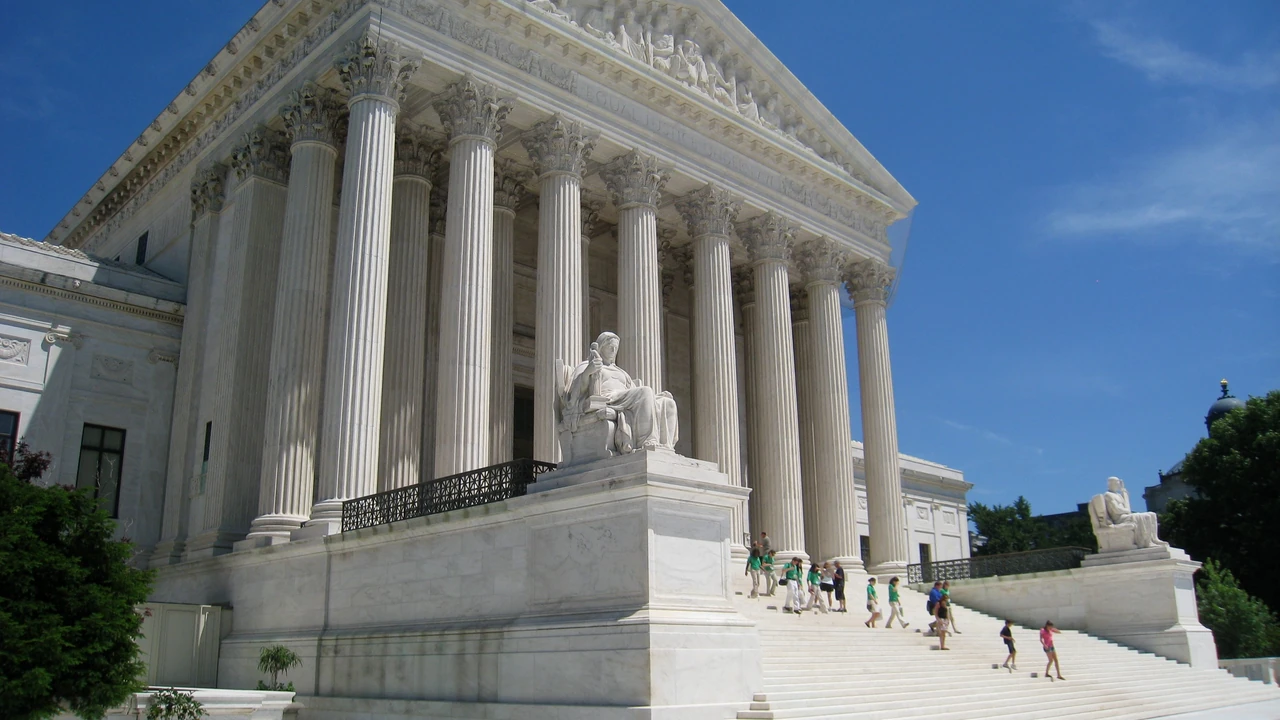
The Supreme Court agreed on November 13 to hear the Trump administration’s defense of Proclamation 10888, which blocks covered people who cross the southern border from applying for asylum. The justices limited review to the policy’s lawfulness and whether federal law bars the classwide relief entered below. They did not decide the merits, and they did not take the government’s third question challenging the class definition.
The asylum restrictions remain in force while the case proceeds. The D.C. Circuit stayed its mandate after affirming the lower court, leaving in place an earlier partial stay that preserved the asylum bar. Other portions of the lower court’s order—requiring the government to use statutory removal procedures and preserve withholding-of-removal and Convention Against Torture protections—were not stayed.
President Donald Trump issued the proclamation on January 20, 2025, and it was published in the Federal Register nine days later. It declared an ‘invasion’ at the southern border, suspended the physical entry of covered people, directed officials to repel, repatriate or remove them, and barred them from invoking immigration-law provisions that would allow continued presence, including asylum.
A federal district court held the proclamation and its implementing guidance unlawful, and the D.C. Circuit affirmed in April 2026. The appeals court concluded that statutes authorizing the president to suspend entry do not create a separate power to remove people already present outside Congress’s removal procedures. A panel majority also held that the president could not unilaterally eliminate asylum applications; Judge Justin Walker dissented from that asylum holding.
The administration’s strongest argument starts with the executive’s discretion to grant or deny asylum. Its petition says the president may decide categorically that covered applications will be denied and need not accept what it calls futile applications. It also argues that the district court’s classwide injunction violates 8 U.S.C. 1252(f)(1), a provision restricting lower courts from enjoining or restraining specified parts of federal immigration law.
The challengers answer that Congress expressly said any person physically present in or arriving in the United States may apply for asylum regardless of status or manner of entry. Their brief says a categorical pre-denial functions as a new eligibility rule, whatever the government calls it, and therefore must be adopted by regulation and remain consistent with the asylum statute. It also stresses that immigration law treats entry and removal as different powers: authority to suspend entry, they argue, does not authorize a new repatriation system for people already here.
The remedy question may matter beyond this case, but the parties dispute its practical effect here. The D.C. Circuit held that Section 1252(f)(1) did not bar the injunction because it stopped the proclamation and extra-statutory guidance rather than covered immigration provisions. Respondents add that the provision cannot affect the asylum-specific order and that the government did not seek review of the panel’s unanimous vacatur holding; the government replies that the injunction effectively compels use of covered removal procedures.
The administration calls the proclamation indispensable and attributes a 93 percent decline in border encounters to it. The challengers say apprehensions had already fallen more than 90 percent from their December 2023 peak and point to a similar later decline among unaccompanied children, who are not covered. In reply, the government cites encounters of 106,316, 94,183 and 96,033 in October–December 2024, followed by 61,445, 11,710 and 11,011 in January–March 2025, plus sworn declarations from senior officials. Those figures establish timing but do not by themselves isolate the proclamation’s causal effect; the Court’s grant order resolved none of these claims.
Covered people with potentially valid persecution claims bear the immediate cost: loss of the chance to seek asylum and exposure to removal without that form of relief, though statutory withholding and Convention Against Torture protections remain available. The administration says eliminating what it calls futile applications speeds processing and frees federal resources for national-security and public-safety work; the challengers dispute that the proclamation caused the fall in encounters.
The central accountability question is now squarely before the justices: whether discretion over the ultimate grant of asylum also lets a president close a congressionally created application process for an entire category of people. The second question could affect how much practical force a lower-court ruling against that use of executive power can have across the affected class. Until the Court rules, the challenged asylum bar continues operating under the stay.
The evidence record
Source claimThe Court granted review on November 13, limited to Questions 1 and 2, and did not decide the merits.
Article paragraph: 1
Source claimThe D.C. Circuit mandate is stayed and the asylum restrictions remain operative, while other removal protections were not stayed.
Article paragraph: 2
Source claimThe proclamation’s date, asserted legal basis and operative directions are accurately described.
Article paragraph: 3
Source claimThe lower courts’ holdings and the panel split on asylum are accurately summarized.
Article paragraph: 4
Source claimThe government’s discretion and remedial arguments are attributed to its petition.
Article paragraph: 5
Source claimThe challengers’ statutory arguments are attributed to their opposition brief.
Article paragraph: 6
AnalysisThe remedy dispute and possible practical consequence are explained from both sides’ filings.
Article paragraph: 7
Source claimThe challengers’ causal counterargument is presented as a litigant’s position.
Article paragraph: 8
Source claimThe government’s monthly encounter figures and reliance on sworn declarations are accurately attributed to its reply.
Article paragraph: 8
AnalysisThe human costs and claimed governmental benefits are stated from the policy and the government’s filing, with causation kept disputed.
Article paragraph: 9
AnalysisThe final paragraph states the accountability stakes without claiming a merits outcome.
Article paragraph: 10
Sources and access
Each source record identifies its reporting origin, access scope and the date we checked it.
Supreme Court docket, Mullin v. RAICES, No. 26-239
Supreme Court of the United States · Checked November 14, 2026
- Recorded relationship
- original
- Origin
- Supreme Court of the United States
- Access
- Full text
- Locator
- Proceedings and Orders entry dated November 13, 2026
- Source publication
- November 13, 2026
Petition for a writ of certiorari, Mullin v. RAICES
U.S. Department of Justice · Checked November 14, 2026
- Recorded relationship
- original
- Origin
- U.S. Department of Justice
- Access
- Full text
- Locator
- Questions Presented; Introduction; Statement B; pages 4–6 and 11–17
- Source publication
- August 24, 2026
Brief in opposition, Mullin v. RAICES
Respondents in Mullin v. RAICES · Checked November 14, 2026
- Recorded relationship
- original
- Origin
- Respondents in Mullin v. RAICES
- Access
- Full text
- Locator
- Questions Presented; Statement; pages 18–31 and 37–39
- Source publication
- September 23, 2026
Proclamation 10888: Guaranteeing the States Protection Against Invasion
Federal Register · Checked November 14, 2026
- Recorded relationship
- original
- Origin
- Executive Office of the President / Federal Register
- Access
- Full text
- Locator
- 90 FR 8333, proclamation sections 1–5
- Source publication
- January 29, 2025
Reply brief for the petitioners, Mullin v. RAICES
U.S. Department of Justice · Checked November 14, 2026
- Recorded relationship
- original
- Origin
- U.S. Department of Justice
- Access
- Full text
- Locator
- Pages 1–12, especially pages 8–12 on removal relief and encounter data
- Source publication
- October 6, 2026
Prepared with AI research and writing tools. Sources and evidence are listed below. Public Rot is responsible for the published account.
Revision record
Revision 1 · November 14, 2026
Initial publication.
These are the recorded publication notices. Open reader tools, full available revisions or report a possible error →