
Senate moves a sweeping permitting bill toward debate—and would narrow court remedies
The 73–25 cloture vote was not final passage. The current 494-page substitute pairs transmission and data-center cost protections with tighter challenge rules and limits on courts’ power to stop unlawfully approved projects.
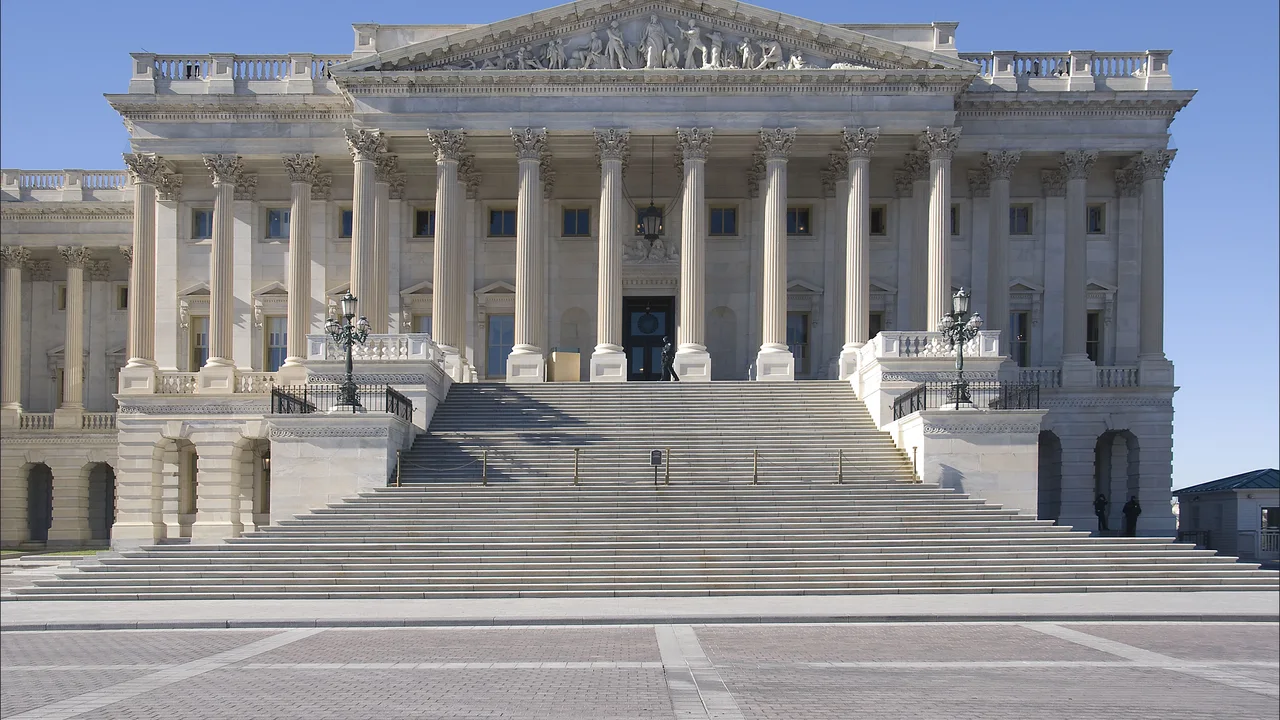
The Senate voted 73–25 Monday to invoke cloture on a motion to proceed to H.R. 2347, the legislative vehicle intended for the Bipartisan American Affordability and Jobs Act. The vote moved the package toward floor debate; it was not final passage, adoption of the substitute amendment or enactment.
The current 494-page substitute would rewrite parts of the National Environmental Policy Act, Clean Water Act, Endangered Species Act, National Historic Preservation Act and Federal Power Act. It also reaches transmission, nuclear licensing, mining, geothermal, hydropower and other federal permitting. Amendments and additional Senate votes remain possible before any final text emerges.
Supporters’ strongest case is that federal approvals take too long and deter needed construction. The four sponsors—Republicans Shelley Moore Capito and Mike Lee and Democrats Sheldon Whitehouse and Martin Heinrich—say clearer timelines would help transmission and renewable projects, create jobs and lower costs. Capito’s floor remarks were explicit that the same system would also benefit coal mines, gas pipelines, solar farms, wind projects and steel mills. Labor, solar, oil-and-gas, manufacturing and other business groups have backed the effort.
The data-center provisions are more specific than the sponsors’ slogans. The substitute would bar utilities from shifting a covered computational-load site’s defined retail incremental electric-system costs to other customers, continue recovery if a site exits before those costs are paid and require financial assurances before utilities build related generation, transmission or distribution upgrades. States could charge more and apply excess revenue to reduce other customers’ rates. Those rules address specified grid costs, not every social or environmental cost of a data center.
The bill would also direct the Energy Department to create a Data Center Community Assistance Program within 180 days. State, local and Tribal governments could request technical information about electricity, water, infrastructure, economic and other community impacts. That is assistance and analysis—not local veto authority or guaranteed mitigation.
The central accountability tradeoff is judicial and participatory leverage. The proposed NEPA provisions set a 150-day filing deadline, generally require challengers to have raised an issue during public comment, require actual or imminent direct harm and route many claims to federal appeals courts. When a court finds an authorization violates NEPA, the normal remedy would be remand without vacating the authorization or issuing an injunction. Preliminary injunctions would remain available only under specified conditions tied to violations of other federal law; the text does not eliminate every possible order stopping work.
Tribal objections remain material despite revisions. The National Congress of American Indians acknowledged that sponsors removed a proposed Interior Department takeover mandate for Tribal Historic Preservation Offices and changed other language. NCAI nevertheless says the substitute retains short consultation clocks, agency off-ramps, exclusions affecting sacred landscapes, federal evaluation and funding penalties for Tribal preservation programs, and restricted judicial remedies. The text does provide technical assistance and corrective periods, but it also allows suspension of certain contracts and grants after continued noncompliance and generally makes remand without vacatur the historic-preservation remedy.
The 73–25 vote shows substantial bipartisan appetite for faster and more durable project approvals. It does not settle which amendments will survive, whether the Senate will finally pass the package or whether the House will accept it. The accountability question is who gets speed and certainty—and which communities lose time, leverage or an effective remedy when an approval process fails.
The evidence record
Source claimThe Senate voted 73–25 on Nov. 9 to invoke cloture on the motion to proceed to H.R. 2347, the BAAJA vehicle; this was not final passage.
Article paragraph: 1
Source claimThe current 494-page proposed substitute spans major environmental, energy, transmission and historic-preservation statutes and remains amendable.
Article paragraph: 2
Source claimSponsors and supporting stakeholders argue the package would speed varied clean- and fossil-energy and infrastructure projects and lower costs.
Article paragraph: 3
Source claimThe substitute contains defined large-load cost-recovery and financial-assurance provisions and a proposed Data Center Community Assistance Program.
Article paragraphs: 4, 5
Source claimThe proposed NEPA provisions tighten filing, participation, standing and forum rules and generally make remand without vacatur or injunction the remedy while preserving limited preliminary-injunction paths.
Article paragraph: 6
Source claimNCAI acknowledges revisions but says consultation, sacred-site, THPO oversight/funding and judicial-remedy harms remain; text contains relevant assistance, evaluation, suspension and remedy provisions.
Article paragraph: 7
AnalysisThe bipartisan vote demonstrates momentum but leaves unresolved who receives speed/certainty and who loses procedural leverage if review fails.
Article paragraph: 8
This synthesis compares the procedural vote, proposed project and ratepayer benefits, and limits on challenge and remedy in the current substitute; it does not predict final passage or project outcomes.
Sources and access
Each source record identifies its reporting origin, access scope and the date we checked it.
Roll call vote 257: cloture on the motion to proceed to H.R. 2347
United States Senate · Checked November 9, 2026
- Recorded relationship
- original
- Origin
- United States Senate
- Access
- Full text
- Locator
- Vote question, Nov. 9 timestamp and 73–25 tally.
- Source publication
- November 9, 2026
Official roll call; controlling news hook.
Wrap Up for Monday, November 9, 2026
Senate Democratic Caucus · Checked November 9, 2026
- Recorded relationship
- original
- Origin
- Senate Democratic Caucus
- Access
- Full text
- Locator
- Roll call item identifying H.R. 2347 as the BAAJA legislative vehicle.
- Source publication
- November 9, 2026
Official procedural summary.
Substitute amendment to H.R. 2347: Bipartisan American Affordability and Jobs Act
U.S. Senate Committee on Environment and Public Works · Checked November 9, 2026
- Recorded relationship
- original
- Origin
- U.S. Senate Committee on Environment and Public Works
- Access
- Full text
- Locator
- 494-page proposed substitute; table of contents pp.1–4; NEPA remedies pp.71–75; data-center cost recovery pp.290–296; community assistance pp.340–343; historic preservation pp.445–480.
- Source publication
- November 7, 2026
Current proposed substitute released by the four sponsors; not finally adopted at publication time.
Senate advances Capito’s Bipartisan American Affordability and Jobs Act
U.S. Senate Committee on Environment and Public Works · Checked November 9, 2026
- Recorded relationship
- original
- Origin
- U.S. Senate Committee on Environment and Public Works
- Access
- Full text
- Locator
- Nov. 9 floor remarks and sponsor description of supported project types, stakeholders and claimed benefits.
- Source publication
- November 9, 2026
Sponsor statement; policy and economic claims are attributed.
NCAI warns BAAJA manager’s amendment still threatens Tribal sovereignty and sacred places
National Congress of American Indians · Checked November 9, 2026
- Recorded relationship
- original
- Origin
- National Congress of American Indians
- Access
- Full text
- Locator
- Nov. 8 statement; substitute changes acknowledged and six remaining objections.
- Source publication
- November 8, 2026
Tribal advocacy statement; objections are attributed and checked against the proposed text.
We cannot support the permitting bill as currently written
Sierra Club via CleanTechnica · Checked November 9, 2026
- Recorded relationship
- syndicated
- Origin
- Sierra Club
- Access
- Full text
- Locator
- Nov. 6 statement supporting faster transmission/clean-energy permitting while opposing current safeguards and remedy limits.
- Source publication
- November 6, 2026
Advocacy statement; position is attributed. Syndicated copy used because the original press page was not accessible in the reviewed session.
Senate advances sweeping energy legislation in first major action since midterm elections
Associated Press · Checked November 9, 2026
- Recorded relationship
- original
- Origin
- Associated Press
- Access
- Full text
- Locator
- Vote context, bipartisan support, proposed revisions and opposition.
- Source publication
- November 9, 2026
Contemporaneous reporting used for procedural and stakeholder context.
Senate wing of the U.S. Capitol, January 2013
Wikimedia Commons / Flickr · Checked November 9, 2026
- Recorded relationship
- original
- Origin
- Ron Cogswell / Flickr
- Access
- Full text
- Locator
- Creator, Jan. 18, 2013 date, dimensions and CC BY 2.0 license.
- Source publication
- January 18, 2013
Visual source only; archival image and not the news hook.

Prepared with AI research and writing tools. Sources and evidence are listed below. Public Rot is responsible for the published account.
Revision record
Revision 1 · November 9, 2026
Initial publication.
These are the recorded publication notices. Open reader tools, full available revisions or report a possible error →