
SEC’s new-case enforcement fell sharply as its workforce shrank
The agency filed 235 standalone actions in fiscal 2026, down 22% from 2025 and 45% from 2024. Its own categories complicate the headline total, but not the decline in new cases.
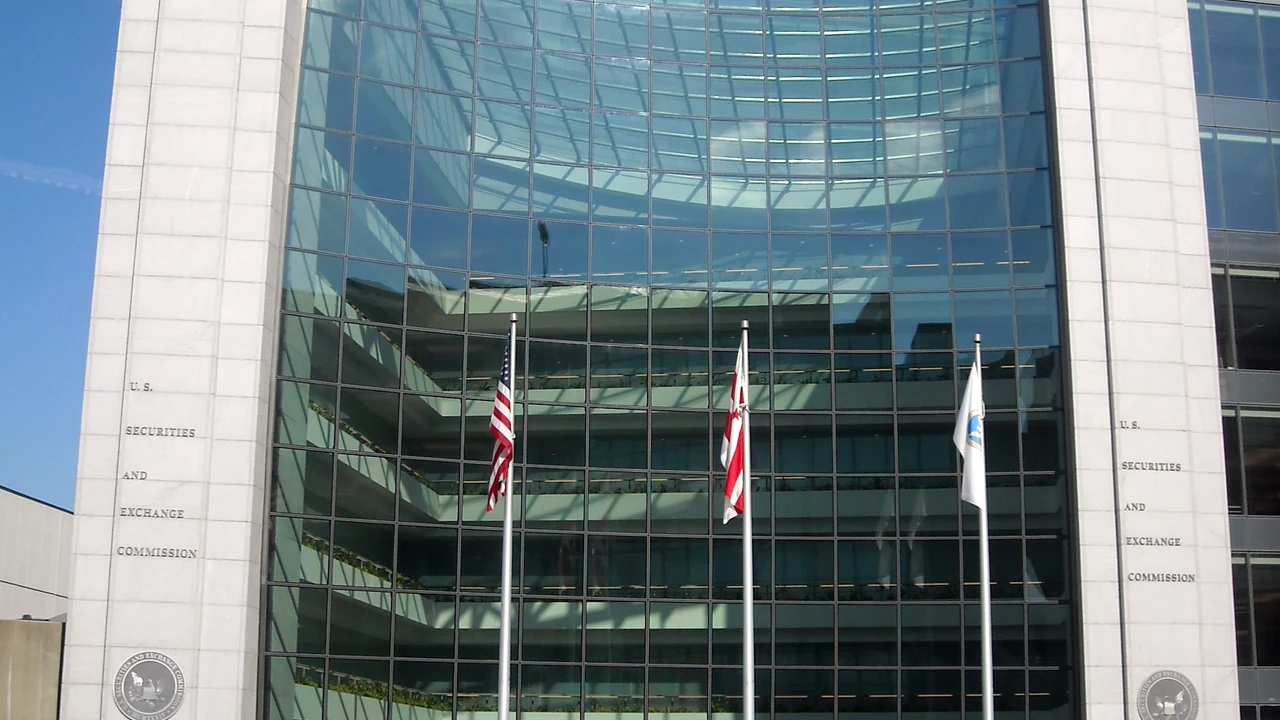
The Securities and Exchange Commission filed 235 standalone enforcement actions in fiscal 2026, according to results released November 10. That was 22.4% fewer than the 303 standalone actions it reported for 2025 and 45.5% fewer than the 431 it reported for 2024. Standalone cases are the cleanest published measure of new enforcement matters because the SEC reports them separately from follow-on proceedings.
The agency’s headline total was 348 actions, compared with 456 in 2025 and 583 in 2024. Those totals are not directly comparable. The earlier years included 84 and 59 actions, respectively, against issuers allegedly delinquent in required filings; the 2026 release did not publish a separate category for those matters. Removing that category from the earlier totals narrows the 2026 decline to 6.5% from 2025, while leaving a 33.6% decline from 2024.
Follow-on administrative proceedings moved the other way. The SEC reported 113 in 2026, up from 69 in 2025 and 93 in 2024. The shift matters: a larger share of the docket involved consequences flowing from prior convictions or injunctions, while the count of newly filed standalone matters fell.
The SEC ordered $1.095 billion in monetary relief in 2026: $752 million in disgorgement and interest and $343 million in civil penalties. Of that total, $235 million was deemed satisfied by payments to other authorities. The agency’s adjusted 2025 comparison was $2.7 billion after removing a giant Stanford judgment, making the reported 2026 amount 59.4% lower. The comparison remains imperfect because large cases and deemed-satisfied amounts can dominate any single year.
The decline arrived after a major workforce contraction. The Government Accountability Office found that the SEC’s Enforcement Division lost 235 employees, or 18% of its workforce, during fiscal 2025: 109 took separation incentives, 54 entered the deferred-resignation program and 72 left for other reasons. GAO recorded the departures as voluntary and did not find an involuntary reduction in force. The records reviewed here do not establish that staffing losses caused the lower case count.
They do create an accountability question the agency’s annual tally does not answer: which investigations were delayed, narrowed or never opened when nearly one in five enforcement employees left? Fewer new cases can reduce the probability that misconduct is detected or challenged, benefiting regulated firms at the expense of investors. That is a risk to test, not proof that deterrence weakened in every market.
The strongest contrary evidence is substantial. The SEC said it returned $731 million to more than 250,000 investors, up from $262 million in 2025 and $345 million in 2024. It also charged individuals in about two-thirds of standalone actions, received roughly 26,000 whistleblower tips and awarded more than $158 million to 65 whistleblowers. Distributions often resolve older cases, however, so they do not erase the drop in newly filed matters.
Enforcement Director Margaret Woodcock said the 2026 count was affected by a government shutdown and leadership transitions. She also argued that case totals omit fraud stopped before losses grow, remediation, cooperation and deterrence. Those are legitimate limits on raw counts, but the agency did not publish a substitute measure showing whether those outcomes offset the decline in new filings.
The SEC says it is rebuilding capacity through targeted hiring and new retail-fraud, accounting-fraud, analytics and trial units. It also reported more than a dozen investigations by a new Retail Fraud Working Group. Those initiatives are evidence of focus, not yet evidence of restored enforcement volume or deterrence.
A transparent next-year test would pair action counts with staffing by function, investigation openings and closures, time to resolution, money actually collected, investor distributions and outcomes of matters resolved without charges. Until then, the record supports a narrower conclusion: new standalone enforcement fell materially, the workforce had already shrunk, and the public cannot see whether prioritization preserved accountability where the numbers declined.
The evidence record
Source claimFiscal 2026 standalone, total and follow-on action counts and November 10 release.
Article paragraphs: 1, 2, 3
Source claimComparisons to fiscal 2025 counts, delinquent-filing category, adjusted monetary relief and distributions.
Article paragraphs: 1, 2, 3, 4, 7
Source claimComparisons to fiscal 2024 counts, delinquent-filing category, monetary relief and distributions.
Article paragraphs: 1, 2, 3, 4, 7
AnalysisPercent changes and category-adjusted totals.
Article paragraphs: 1, 2, 3, 4
Arithmetic from the three SEC annual releases: 235/303, 235/431, 348/(456-84), 348/(583-59), 113/69, 113/93 and 1.095/2.7. Percentages are rounded to one decimal place.
Source claimSEC monetary relief, deemed-satisfied amount, investor returns, individual charges, whistleblower tips and awards.
Article paragraphs: 4, 7
Source claimEnforcement Division attrition and departure categories.
Article paragraph: 5
AnalysisWorkforce attrition is context but is not established as the cause of lower case counts.
Article paragraphs: 5, 6
The GAO workforce report and SEC results are temporally related records, but neither source supplies a causal analysis. The article explicitly withholds a causal finding.
AnalysisAccountability risks and proposed transparency tests.
Article paragraphs: 6, 10
Interpretive assessment: fewer filed matters can lower detection or challenge probability, while staffing, openings, resolution time, collections and non-charge outcomes would allow the public to test whether prioritization preserved deterrence.
Source claimShutdown, transitions and limits of raw counts; targeted hiring and new units.
Article paragraphs: 8, 9
AnalysisNew units and working-group activity do not yet demonstrate restored volume or deterrence.
Article paragraphs: 9, 10
The SEC describes organizational changes and investigations but provides no completed-year outcome series showing that they restored new-case volume or deterrence.
Sources and access
Each source record identifies its reporting origin, access scope and the date we checked it.
SEC Announces Enforcement Annual Results for Fiscal Year 2026
U.S. Securities and Exchange Commission · Checked November 11, 2026
- Recorded relationship
- original
- Origin
- U.S. Securities and Exchange Commission
- Access
- Full text
- Locator
- Release body and statistical table: total, standalone and follow-on actions; monetary relief; distributions; individual charges; tips and awards.
- Source publication
- November 10, 2026
Primary annual-results release and the fresh news hook.
SEC Announces Enforcement Results for Fiscal Year 2025
U.S. Securities and Exchange Commission · Checked November 11, 2026
- Recorded relationship
- original
- Origin
- U.S. Securities and Exchange Commission
- Access
- Full text
- Locator
- Annual-results release: 303 standalone, 69 follow-on and 84 delinquent-filing actions; adjusted $2.7 billion relief and $262 million returned.
Primary prior-year comparison; the adjusted monetary figure is the SEC's own comparison.
SEC Announces Enforcement Results for Fiscal Year 2024
U.S. Securities and Exchange Commission · Checked November 11, 2026
- Recorded relationship
- original
- Origin
- U.S. Securities and Exchange Commission
- Access
- Full text
- Locator
- Annual-results release: 431 standalone, 93 follow-on and 59 delinquent-filing actions; $8.2 billion relief and $345 million distributed.
Primary two-year comparison; the release says 56% of monetary relief came from the Terraform matter.
SEC Workforce Changes in Fiscal Year 2025
U.S. Government Accountability Office · Checked November 11, 2026
- Recorded relationship
- original
- Origin
- U.S. Government Accountability Office
- Access
- Full text
- Locator
- Enforcement workforce table and discussion: 235 departures from 1,305 staff, with separation-incentive, deferred-resignation and other departure categories.
Primary oversight report. It records attrition but does not establish causation for enforcement outputs.
Remarks at the A.A. Sommer Jr. Lecture on Corporate, Securities and Financial Law
U.S. Securities and Exchange Commission · Checked November 11, 2026
- Recorded relationship
- original
- Origin
- U.S. Securities and Exchange Commission
- Access
- Full text
- Locator
- Sections on fiscal 2026 results, shutdown and leadership transitions, limits of raw action counts, hiring and new enforcement units.
- Source publication
- November 10, 2026
Official remarks by Enforcement Director Margaret Woodcock; used for the agency's explanation and contrary evidence.
Prepared with AI research and writing tools. Sources, calculations and evidence are listed below. Public Rot is responsible for the published account.
Revision record
Revision 1 · November 11, 2026
Initial publication.
These are the recorded publication notices. Open reader tools, full available revisions or report a possible error →