
ICE expanded detention by 52% while cutting key facility inspections
GAO found the agency had not documented a systemwide assessment of whether reduced, ended and self-conducted inspections still protect detainees.
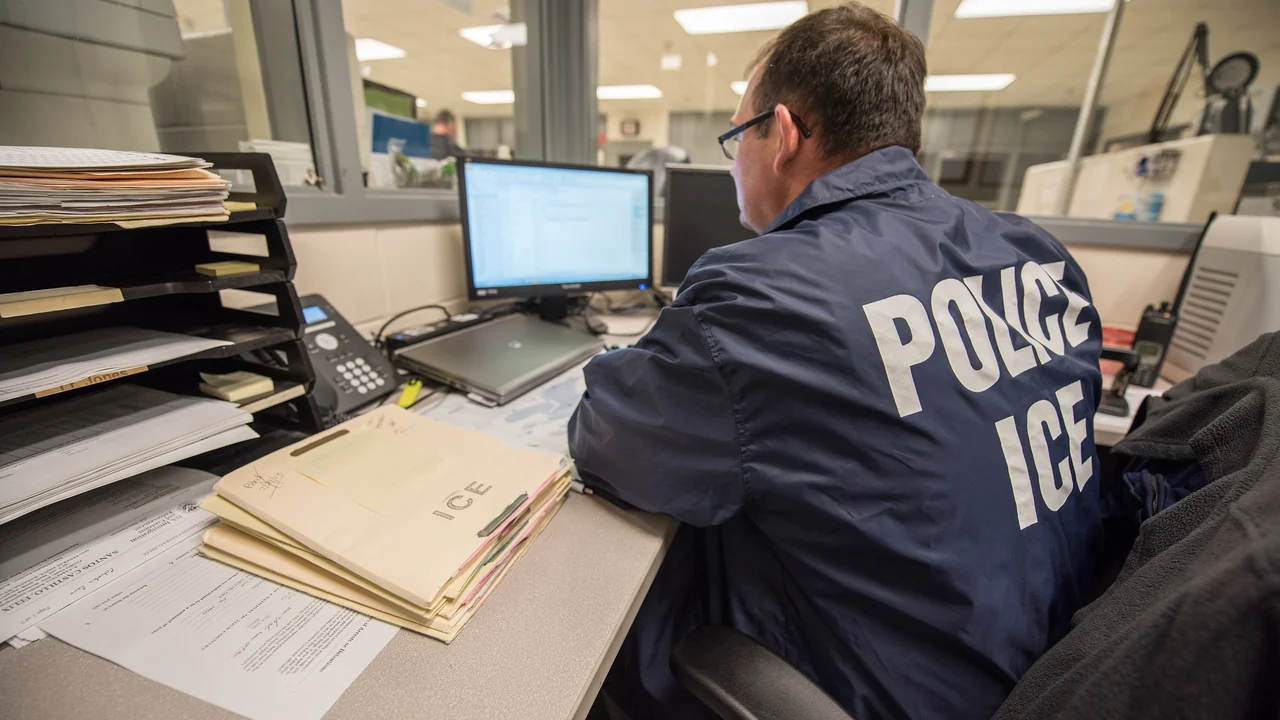
U.S. Immigration and Customs Enforcement expanded its average daily population in long-term detention facilities by 52 percent—from 40,587 people in April 2025 to 61,817 in April 2026—while the number of authorized facilities rose from 128 to 172. Over roughly the same period, ICE’s Office of Detention Oversight cut its annual inspections from 194 in fiscal 2024 to 102 in fiscal 2025, the Government Accountability Office reported November 5.
The change was broader than a lower inspection count. ICE shifted its main inspections from twice yearly to annually for dedicated facilities and every two years for non-dedicated facilities. Some smaller and U.S. Marshals Service facilities now conduct assisted self-inspections. The office also generally stopped unannounced inspections. A separate statutory ombudsman office conducted its last inspection in January 2026 after losing funding.
ICE’s March 2025 policy memo said the new approach would reduce burdens on service providers and help the agency obtain detention space from state, county and local partners. The system includes facilities operated by private companies and facilities used through agreements with state and local governments. Congress provided $45 billion through fiscal 2029 for detention capacity in a July 2025 law, and another 2026 law included about $1.1 billion that ICE allocated to custody operations, according to GAO.
GAO did not conclude that every detention facility had deteriorated. It found that ICE had not documented a holistic assessment of whether the changed inspection system could identify deficiencies quickly enough. In fiscal 2024, inspections at 70 facilities operating under one set of detention standards identified 933 deficiencies involving medical care, food service, environmental health and other areas.
DHS disputed the idea that fewer inspections necessarily meant fewer rated facility assessments. It told GAO that ICE reviews recurring deficiencies and can change the timing or frequency of oversight. Medical inspections by the ICE Health Service Corps continued, and the DHS inspector general received $20 million for a temporary increase that is expected to include about 96 contractor-assisted inspections. DHS agreed with GAO’s two recommendations but asked that they be closed as already implemented. GAO declined because ICE had not supplied a documented assessment covering the combined changes.
Independent reporting found concrete gaps before GAO finished its review. A July CBS News analysis reported that 15 of 45 detention facilities holding at least 500 people had gone more than a year without an inspection, and five had no inspection on record. CBS said nearly 90 percent of ICE inspections since 2019 found at least one deficiency. DHS told CBS that its risk-based system remained robust, that dedicated facilities were scheduled for inspection that fiscal year and that ICE works with facilities to correct problems.
The supported finding is narrower than a claim that every facility failed and more consequential than a staffing adjustment: ICE enlarged a detention-and-contracting system while reducing, ending or shifting inspections without showing GAO a systemwide analysis that the replacement structure could catch health, safety and contract-compliance problems in time.
The evidence record
Source claimICE daily detention population increased from 40,587 to 61,817, authorized facilities from 128 to 172, and ODO inspections fell from 194 to 102.
Article paragraph: 1
Source claimInspection frequency, self-inspection, notice and ombudsman changes.
Article paragraph: 2
Source claimICE stated reduced provider burden and expanded detention-space access; facility arrangements and appropriations.
Article paragraph: 3
Source claimGAO's bounded oversight finding and 933 deficiencies at 70 facilities.
Article paragraph: 4
Source claimDHS response, continuing medical inspections, temporary OIG increase and GAO's refusal to close recommendations.
Article paragraph: 5
Source claimCBS inspection-gap and deficiency analysis, methodology and DHS response.
Article paragraph: 6
AnalysisExpansion plus unassessed inspection restructuring creates an accountability gap.
Article paragraph: 7
GAO documented simultaneous growth, multiple inspection changes and the absence of a holistic assessment; the paragraph preserves GAO's limited finding and does not infer universal failure or causation.
Sources and access
Each source record identifies its reporting origin, access scope and the date we checked it.
Immigration Detention: Changes In Inspections of ICE Facilities Raise Questions About Oversight
U.S. Government Accountability Office · Checked November 6, 2026
- Recorded relationship
- original
- Origin
- U.S. Government Accountability Office
- Access
- Full text
- Locator
- Pages 1–10 and Appendix I: population and facility counts; inspection changes; ICE rationale; deficiencies; recommendations; DHS response; GAO evaluation.
- Source publication
- November 5, 2026
Full 20-page performance-audit PDF read. Counts and agency comments were checked; 52 percent is GAO's rounded change from 40,587 to 61,817.
More than a dozen immigration detention facilities have gone over a year without inspection under revised ICE policies
CBS News / Julia Ingram · Checked November 6, 2026
- Recorded relationship
- original
- Origin
- CBS News / Julia Ingram
- Access
- Full text
- Locator
- Article body and About the data section: large-facility inspection gaps, deficiency rate, DHS responses and methodology.
- Source publication
- July 9, 2026
Original data report read in full. Its July snapshot predates the November GAO report and does not measure every facility or prove that an inspection gap caused a specific harm.
Prepared with AI research and writing tools. Sources and evidence are listed below. Public Rot is responsible for the published account.
Revision record
Revision 1 · November 6, 2026
Initial publication.
These are the recorded publication notices. Open reader tools, full available revisions or report a possible error →