
U.S. skips universal U.N. rights review. The Council postpones accountability again.
Washington rejected the peer review applied to all 193 U.N. members. The Council moved the examination to January instead of using the record already before it.
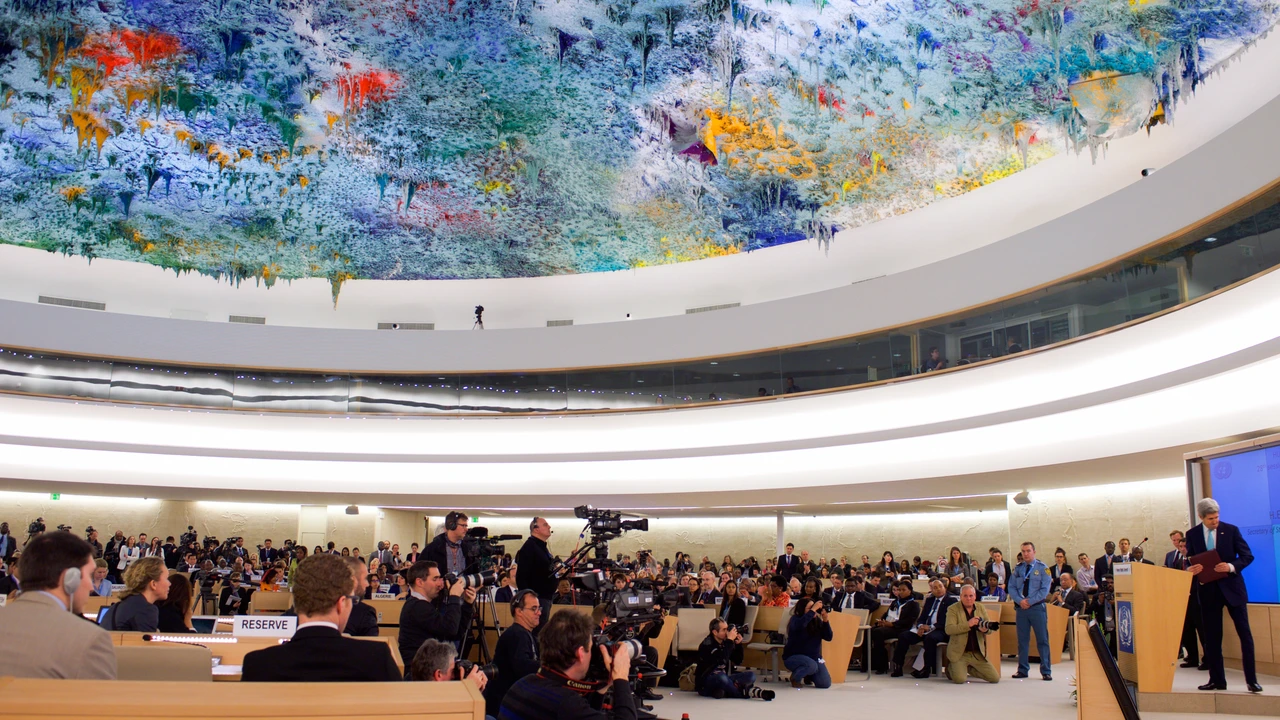
The United States left its seat empty at the U.N. Human Rights Council on Tuesday, becoming the first country to reject the Universal Periodic Review from beginning to end, according to the Associated Press. The Council postponed the examination until January rather than accepting advocates’ request to assess the existing record without a U.S. delegation.
This was not a scheduling mishap. The Trump administration withdrew from the Council last year, skipped the review originally scheduled for November 2025 and did not return for the one-year-delayed session. The U.S. still belongs to the United Nations; it rejected a peer-review process that applies to every member.
The Universal Periodic Review examines all 193 U.N. member states on a rotating cycle and produces nonbinding recommendations. Israel delayed its 2013 review but later participated. Nicaragua took part in its interactive dialogue before refusing to cooperate with adoption of the outcome. AP reported that the United States is the first state to reject the process from beginning to end.
The State Department’s defense is institutional: participation would imply endorsement of a body it calls irredeemable, biased by anti-American rhetoric and unwilling to condemn major rights violators. That is the strongest case for refusing the forum, and it deserves to be stated plainly.
But an institutional critique does not answer the allegations in the U.S. record. Human Rights Watch said civil society filed 192 submissions addressing issues including migration policy and racial discrimination; Reuters reported that reviewing states also planned questions about abortion and the death penalty. Those are allegations and policy disputes to examine, not findings that prove violations.
The Council’s credibility problems are longstanding. The point of a universal mechanism, however, is that governments do not get to decide that scrutiny applies only when they approve of the venue. Refusal lets Washington avoid answering the record while still invoking human rights against other governments.
Council members adopted without a vote a decision addressing U.S. non-cooperation, AP reported, and moved the review to January. The Council’s procedural position is that the normal review cannot proceed without state representatives. That preserves the formal structure of the process—but also gives a government that refuses to appear the power to halt merits scrutiny.
Human Rights Watch urged a briefing by the U.N. human rights chief and an enhanced dialogue. The Geneva-based Justitia Center for Legal Protection argued for a harder response: use the evidence already submitted, make recommendations and adopt an outcome despite the empty chair. The two proposals differ, but both reject treating postponement as sufficient accountability.
A January delay preserves another chance for the United States to participate. It also postpones questions, recommendations and a public response to the record. Unless the Council develops a credible way to examine persistent non-cooperation, the lesson for powerful governments is that refusing the mechanism works.
The United States participated in the same review during Trump’s first term. Tuesday’s absence was therefore a policy choice, not an inherent bar to engagement. The accountability test is reciprocal: Washington should answer the record even while challenging the Council’s failures, and the Council should show that universality survives a powerful state’s refusal.
The Council had not posted an accessible final U.S. decision text or an exact January review date when this article was prepared. AP and Reuters support the adoption, empty seat and postponement; this account does not assign the action a document number or confuse it with the Council’s separate October decision concerning Nicaragua.
The evidence record
Source claimThe U.S. seat was empty, AP characterized the refusal as the first beginning-to-end rejection, and the Council postponed to January rather than adopting advocates’ proposed in-absentia remedy.
Article paragraph: 1
Source claimThe United States withdrew from the Council, skipped the 2025 date and did not appear at the delayed November 10, 2026 session.
Article paragraph: 2
Source claimUPR covers all 193 members; Israel later participated after delay; Nicaragua participated in dialogue before outcome non-cooperation; AP reports the U.S. distinction.
Article paragraph: 3
Source claimThe State Department says participation would imply endorsement and attacks the Council’s credibility, bias and treatment of major violators.
Article paragraph: 4
Source claimHuman Rights Watch reports 192 submissions; Reuters reports planned abortion and death-penalty questions. The paragraph explicitly treats these as allegations and disputes, not proven findings.
Article paragraph: 5
AnalysisUniversal scrutiny loses force if governments can opt out whenever they reject the venue.
Article paragraph: 6
The UPR applies to all U.N. members, while the U.S. refusal prevented questions and recommendations at the scheduled session.
Source claimAP reports a decision addressing U.S. non-cooperation adopted without vote; the Council postponed because the normal review requires state representatives.
Article paragraph: 7
Source claimHRW proposed a High Commissioner briefing/enhanced dialogue; JPTi proposed proceeding from the existing record.
Article paragraph: 8
AnalysisPostponement preserves participation opportunity but also delays merits scrutiny and can reward refusal.
Article paragraph: 9
The Council moved the review to January without conducting the scheduled examination or issuing recommendations.
AnalysisReuters reports that the United States participated during Trump’s first term; reciprocity and Council resilience are the resulting accountability tests.
Article paragraph: 10
Prior participation establishes that engagement was possible; the current refusal is a policy choice.
Source claimNo accessible final U.S. decision text, document number or exact January date was found; AP and Reuters support only the bounded claims stated.
Article paragraph: 11
Sources and access
Each source record identifies its reporting origin, access scope and the date we checked it.
U.S. skips U.N. human rights review, drawing censure
Reuters · Checked November 10, 2026
- Recorded relationship
- original
- Origin
- Reuters
- Access
- Full text
- Locator
- November 10 report; empty U.S. seat, postponement to January, State Department rationale and planned questions
- Source publication
- November 10, 2026
U.S. skips United Nations review of its human rights record
Associated Press · Checked November 10, 2026
- Recorded relationship
- original
- Origin
- Associated Press
- Access
- Full text
- Locator
- November 10 report; first beginning-to-end refusal, consensus decision, January postponement and Council procedure
- Source publication
- November 10, 2026
53rd session of the Universal Periodic Review Working Group
Office of the U.N. High Commissioner for Human Rights · Checked November 10, 2026
- Recorded relationship
- original
- Origin
- Office of the U.N. High Commissioner for Human Rights
- Access
- Full text
- Locator
- Official schedule listing United States review for November 10, 2026, 14:30–18:00
- Source publication
- November 10, 2026
United States of America Review — 53rd Session of Universal Periodic Review
UN Web TV · Checked November 10, 2026
- Recorded relationship
- original
- Origin
- United Nations
- Access
- Metadata
- Locator
- Official event page and metadata for November 10 United States review
- Source publication
- November 10, 2026
Playback was not fully inspectable in text retrieval; Reuters independently supports the empty-seat fact.
Civil society calls for scrutiny of United States rights record
Human Rights Watch · Checked November 10, 2026
- Recorded relationship
- original
- Origin
- Human Rights Watch
- Access
- Full text
- Locator
- November 6 statement; 192 submissions and civil-society issues
- Source publication
- November 6, 2026
Human Rights Council must urgently address persistent non-cooperation with the UPR
Human Rights Watch · Checked November 10, 2026
- Recorded relationship
- original
- Origin
- Human Rights Watch
- Access
- Full text
- Locator
- October 29 statement; Nicaragua precedent and proposed High Commissioner briefing/enhanced dialogue
- Source publication
- October 29, 2026
The UPR must proceed
Justitia Center for Legal Protection · Checked November 10, 2026
- Recorded relationship
- original
- Origin
- Justitia Center for Legal Protection
- Access
- Full text
- Locator
- November 5 argument for an in-absentia review using the existing record
- Source publication
- November 5, 2026
Prepared with AI research and writing tools. Sources and evidence are listed below. Public Rot is responsible for the published account.
Revision record
Revision 1 · November 10, 2026
Initial publication.
These are the recorded publication notices. Open reader tools, full available revisions or report a possible error →