
HUD credited its policies for a historic homelessness drop. Two cited actions came after the count.
Independent estimates corroborate a roughly 6% decline. HUD has not released the tables needed to show who improved or test its causal story.
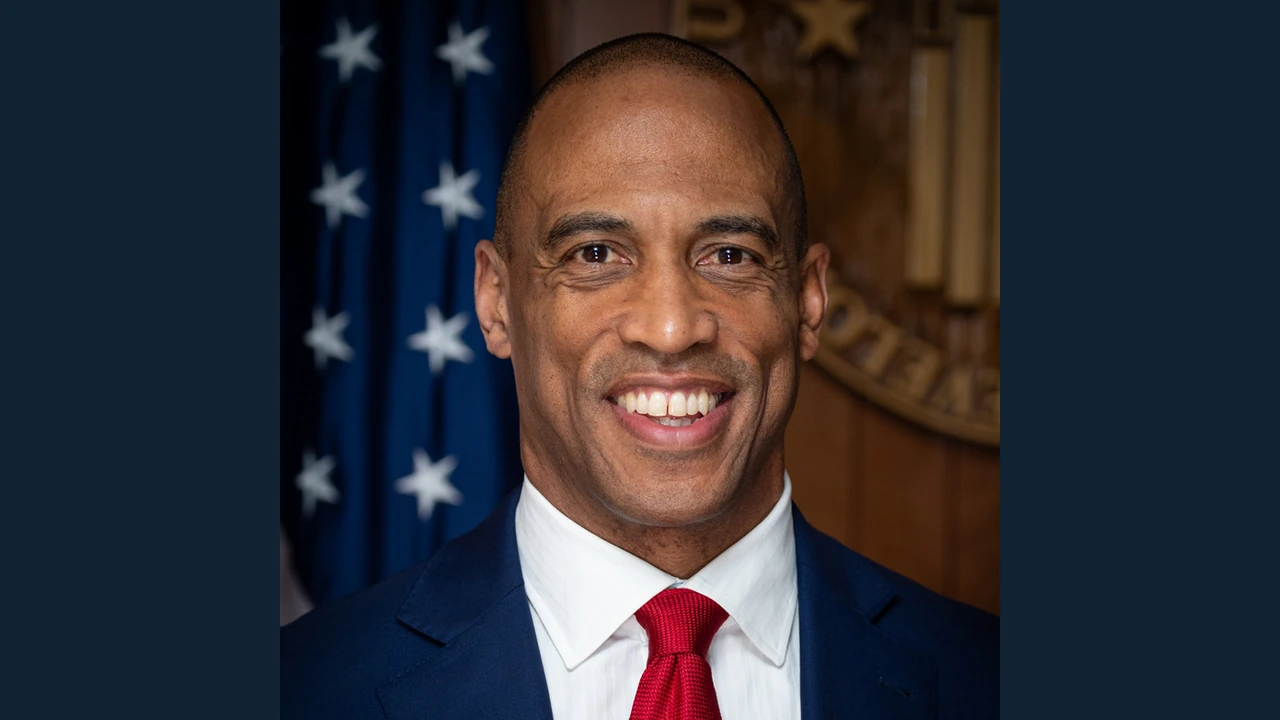
The Department of Housing and Urban Development announced on November 6 that 698,425 people were counted as homeless on one night in January 2026, down 6.3% from the previous year. HUD called it the largest decrease on record and said President Donald Trump’s policies drove the result.
The headline decline is real in HUD’s aggregate: the January 2025 count was 745,652, so the new figure is 47,227 lower, a 6.33% decrease. But HUD released no 2026 national report, state tables or breakdowns for sheltered, unsheltered, chronic, veteran, youth or family homelessness with the announcement.
Independent work supports the scale of the decline. An analysis commissioned by the National Alliance to End Homelessness estimated about 693,000 people, down 6.7%. Community Solutions estimated about 699,700, down 6.2%, from 182 reporting communities that represented 74% of the 2025 national count. Across reporting communities it found declines in both sheltered and unsheltered homelessness; 103 of the 182 communities recorded an overall decrease.
HUD used the drop to credit border enforcement, a Supreme Court ruling that allowed local camping bans, a July 2025 executive order and its shift from Housing First toward Treatment First. Secretary Scott Turner said Trump’s actions drove the decrease and described the count as proof that the administration’s approach works.
Two measures HUD highlighted cannot explain the January 2026 count because they came later. The department announced its revised $4.04 billion homelessness funding competition on June 1, 2026. It released the Treatment First toolkit on August 12. Both occurred months after communities conducted the count.
Trump’s July 24, 2025 executive order did precede the count. It directed agencies to favor treatment, civil commitment and enforcement against public camping. The aggregate total alone does not show whether those policies, border changes, local housing programs, shelter capacity, migration or counting practices produced the decline.
HUD’s own submission guidance shows what the missing national record should contain. Communities report whether they counted sheltered people only or both sheltered and unsheltered people, along with household, demographic, chronic-homelessness, veteran, youth and methodology information. Those fields are necessary to identify who experienced improvement and whether the comparison is consistent.
Local results show why composition matters. Utah reported declines in unsheltered and chronic homelessness, while homelessness among people 65 and older increased and youth trends worsened in some areas. Salt Lake County reported a 13.6% increase in housing inventory since 2024 alongside fewer unsheltered and more sheltered chronically homeless people.
The decrease follows a very high baseline. HUD’s May report counted 745,652 people homeless in January 2025, including 266,320 people living unsheltered. Even its November release said homelessness remains near a historic high.
The independent estimates are important contrary evidence against dismissing the new total as mere spin. They make a major nationwide decline—and likely the largest since comparable national Point-in-Time reporting began in 2007—plausible. But the reporting communities were not a random sample, early-reporting bias could overstate the decrease, and both analyses preceded complete public federal tables. Neither establishes HUD’s account of why the change occurred.
The accountability question is not whether a decline should be welcomed. It is whether HUD will publish the evidence needed to distinguish fewer people living outside from changes in shelter use, geography or counting—and whether it will separate policies operating before January from programs launched after the measurement.
The next test is straightforward: release the full 2026 Point-in-Time and Housing Inventory Count tables, document methodology changes, identify the communities and populations driving the decline and show how each claimed policy could have affected the count before it occurred. Until then, HUD has announced a consequential improvement without providing the record needed to audit its explanation.
The evidence record
Source claimHUD’s November 6 release announced 698,425 people counted homeless on one night in January 2026, down 6.3%, and attributed the result to Trump administration policies.
Article paragraph: 1
AnalysisThe 2025 baseline was 745,652, making the arithmetic decline 47,227 or 6.33%, and HUD did not publish the 2026 report or breakdown tables with the announcement.
Article paragraph: 2
Subtraction and percentage calculation from HUD’s two published totals; the HUD AHAR page lists only reports through 2025, and the Alliance research summary independently notes the missing report and subpopulation data.
Source claimThe National Alliance to End Homelessness analysis estimated about 693,000 people, a 6.7% decline.
Article paragraph: 3
Source claimCommunity Solutions estimated about 699,700 people, a 6.2% decline, using 182 reporting communities representing 74% of the prior count; across reporting communities it found sheltered and unsheltered declines, and 103 of 182 communities recorded overall decreases.
Article paragraph: 3
Source claimHUD credited border enforcement, encampment authority, the July 2025 order and Treatment First in its explanation.
Article paragraph: 4
AnalysisHUD’s revised funding competition and Treatment First toolkit were announced in June and August 2026, after the January count.
Article paragraph: 5
Direct chronological comparison of the January 2026 measurement with HUD’s June 1 and August 12 release dates; later actions cannot cause an earlier count.
AnalysisThe July 2025 order preceded the count, but the aggregate alone cannot identify which policies or local conditions caused the change.
Article paragraph: 6
The order’s date and directives are established; causal limits follow from the absence of disaggregated and comparative evidence in the aggregate release.
Source claimHUD guidance requires detailed sheltered/unsheltered, household, demographic, chronic, veteran, youth and methodology submissions.
Article paragraph: 7
Source claimUtah’s detailed 2026 results show mixed subpopulation and sheltered/unsheltered trends despite overall progress, while Salt Lake County reported a 13.6% housing-inventory increase since 2024 alongside fewer unsheltered and more sheltered chronically homeless people.
Article paragraph: 8
Source claimHUD’s 2025 baseline included 266,320 unsheltered people, and HUD says homelessness remains near a historic high.
Article paragraph: 9
AnalysisIndependent estimates make the decline and a record post-2007 change plausible but do not establish HUD’s causal account; nonrandom coverage, early-reporting bias and incomplete federal tables limit the estimates.
Article paragraph: 10
Synthesis of the National Alliance and Community Solutions methodologies, findings and stated limitations, bounded to magnitude rather than cause.
AnalysisThe public-accountability question is whether HUD will release composition and timing evidence needed to test its explanation.
Article paragraph: 11
Accountability framework derived from the missing national tables, the detailed fields HUD collects and the chronology of the cited policies.
AnalysisPublishing the full tables, methods, drivers and policy timeline would permit the announced result and explanation to be audited.
Article paragraph: 12
Specific transparency tests tied to the data elements and timing gaps documented in the cited records.
Sources and access
Each source record identifies its reporting origin, access scope and the date we checked it.
HUD Announces Largest Decrease in Homelessness
U.S. Department of Housing and Urban Development · Checked November 7, 2026
- Recorded relationship
- original
- Origin
- U.S. Department of Housing and Urban Development
- Access
- Selected excerpt
- Locator
- November 6 date, aggregate total, percentage and policy-attribution paragraphs; direct page returned 403, text cross-checked against the unedited distribution copy
- Source publication
- November 6, 2026
HUD Announces Largest Decrease in Homelessness — unedited distribution copy
Public Technologies, distributing HUD · Checked November 7, 2026
- Recorded relationship
- syndicated
- Origin
- U.S. Department of Housing and Urban Development
- Access
- Full text
- Locator
- Lines 224–242 identify the November 6 HUD release, reproduce its full claims and state the copy is unedited and unaltered
- Source publication
- November 6, 2026
HUD Releases 2025 Annual Homelessness Assessment Report to Congress
U.S. Department of Housing and Urban Development · Checked November 7, 2026
- Recorded relationship
- original
- Origin
- U.S. Department of Housing and Urban Development
- Access
- Full text
- Locator
- May 29 release, opening and key findings: 745,652 total and 266,320 unsheltered in January 2025
- Source publication
- May 29, 2026
2026 National Homelessness Estimate
National Alliance to End Homelessness · Checked November 7, 2026
- Recorded relationship
- original
- Origin
- National Alliance to End Homelessness
- Access
- Selected excerpt
- Locator
- Search-accessible research summary: commissioned independent estimate of a 6.7% decline and statement that HUD had not posted a report or subpopulation data
- Source publication
- November 6, 2026
2026 Overall Homelessness Estimates
Community Solutions · Checked November 7, 2026
- Recorded relationship
- original
- Origin
- Community Solutions
- Access
- Selected excerpt
- Locator
- Search-accessible methodology and findings: local counts through September 4 and largest projected annual decline since 2007 if estimate holds
2026 HIC and PIT Count Data Submission Guidance
HUD Exchange · Checked November 7, 2026
- Recorded relationship
- original
- Origin
- U.S. Department of Housing and Urban Development
- Access
- Full text
- Locator
- Pages 3, 52–67: two-part submission, sheltered/unsheltered types, required demographic and subpopulation fields, methodology and status
- Source publication
- April 1, 2026
2026 Statewide Point-in-Time Count Findings
Salt Lake County and Utah Office of Homeless Services · Checked November 7, 2026
- Recorded relationship
- original
- Origin
- Salt Lake County and Utah Office of Homeless Services
- Access
- Full text
- Locator
- August 3 release, methodology and statewide/local sheltered, unsheltered, chronic, youth and senior findings
- Source publication
- August 3, 2026
Ending Crime and Disorder on America’s Streets
The White House · Checked November 7, 2026
- Recorded relationship
- original
- Origin
- The White House
- Access
- Full text
- Locator
- July 24, 2025 date and sections 2–5 on commitment, encampment enforcement and homelessness grants
- Source publication
- July 24, 2025
HUD Overhauls Federal Homelessness Assistance
U.S. Department of Housing and Urban Development · Checked November 7, 2026
- Recorded relationship
- original
- Origin
- U.S. Department of Housing and Urban Development
- Access
- Full text
- Locator
- June 1, 2026 release announcing the $4.04 billion funding competition
- Source publication
- June 1, 2026
ONDCP, HHS, and HUD Launch First-Ever Treatment First Toolkit
U.S. Department of Housing and Urban Development · Checked November 7, 2026
- Recorded relationship
- original
- Origin
- U.S. Department of Housing and Urban Development
- Access
- Full text
- Locator
- August 12, 2026 release announcing the Treatment First toolkit
- Source publication
- August 12, 2026
Prepared with AI research and writing tools. Sources and evidence are listed below. Public Rot is responsible for the published account.
Revision record
Revision 1 · November 7, 2026
Initial publication.
These are the recorded publication notices. Open reader tools, full available revisions or report a possible error →