
Honda’s steering recall came about 10 months after it reproduced the failure
The filing does not show an illegal reporting delay. It documents years of field reports and months of further investigation before Honda decided the defect was safety-related.
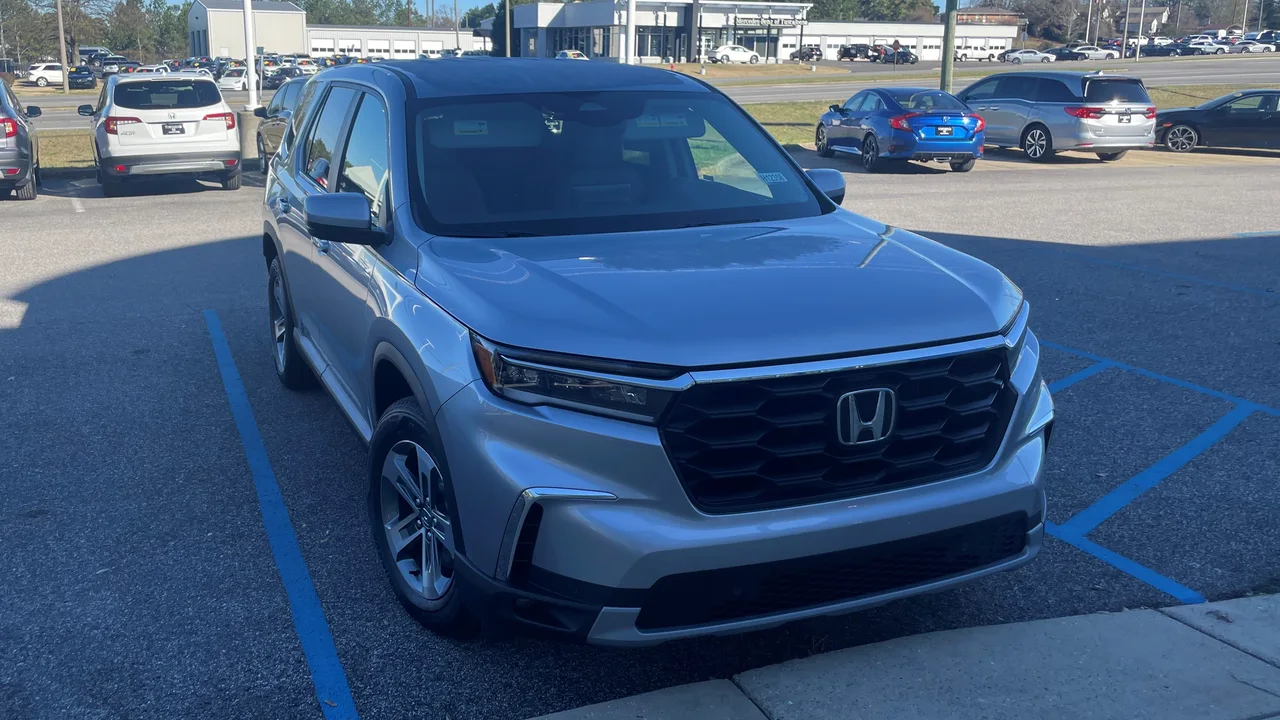
Honda’s new 635,808-vehicle steering recall is also a timeline of the investigation before the recall notice. The Part 573 report that the National Highway Traffic Safety Administration acknowledged November 9 says Honda reproduced the software failure in December 2025, confirmed its narrow operating conditions in February 2026 and did not decide that a safety-related defect existed until October 22. Honda published the report details November 10.
The recall covers 383,110 Honda Pilot SUVs from model years 2023–2025, 177,100 Acura MDX SUVs from 2022–2024 and 75,598 Acura TLX sedans from 2021–2025. Honda estimates every vehicle in the recalled population contains the faulty software configuration; that does not mean every vehicle will lose steering assist. Under specific conditions, the electronic power-steering software can divide by zero and then respond to the error by disabling power assist. Honda says steering effort then increases and vehicle controllability may be reduced.
Honda’s chronology begins November 29, 2021, when it received the first report. From August 2023 through August 2025, it received more reports and investigated with supplier Robert Bosch Automotive Steering; the filing says deleted error codes prevented diagnoses from returned parts. Bosch identified the failure through market-return analysis on August 22, 2025. Honda reproduced it that December using dashcam footage and analysis, confirmed in February that it occurred only under specific conditions while a vehicle was traveling straight, and continued investigation in April, June and September–October.
That record puts 1,788 days between the first report and Honda’s recall decision, 426 days between the supplier identifying the failure and the decision, and roughly ten months between Honda reproducing the problem and deciding it was a safety defect. The 426-day post-identification interval and the months after reproduction are the strongest supported criticism; the first report may have been ambiguous and is less probative by itself. The filing does not say what evidence Honda still needed at each stage, so the chronology alone cannot prove that the investigation was unreasonable or that Honda violated a safety law.
The legal reporting deadline measures a different interval. Federal regulation requires a manufacturer to notify NHTSA no more than five working days after determining that a defect is safety-related. Honda says it made that determination October 22 and filed October 29—the fifth working day. NHTSA’s acknowledgment does not accuse Honda of a late filing.
The counterevidence matters. Honda says the failure occurs only under specific straight-driving conditions, that it kept investigating, and that deleted diagnostic codes hindered earlier analysis. As of October 22, it recorded 146 warranty claims, one injury report and no death reports related to the issue from May 22, 2022 through October 22, 2026. The record does not disclose how many failures occurred without a warranty claim or how Honda weighed those signals.
Dealers will reprogram the steering control unit free. NHTSA’s November 9 letter says VIN lookup begins November 11, while owner letters are planned for December 14; the agency was still reviewing Honda’s proposed owner notice. NHTSA did not attach a do-not-drive or park-outside advisory. Those facts reduce immediate-risk claims, but the filing identifies no broad owner notice during the months after Honda could reproduce the failure.
The accountable distinction is between timely notice after a company’s formal safety decision and how promptly it reaches that decision. Honda’s filing supports the first. It leaves the second largely unexplained. A fuller account would disclose the decision thresholds used after reproduction, the number and severity of intermediate incidents, and why recreation of the failure and confirmation of its operating conditions did not trigger a safety determination sooner.
The evidence record
Source claimFresh November 10 Honda publication and the November 9 NHTSA acknowledgement establish the current recall hook.
Article paragraph: 1
Source claimAffected-model counts total 635,808 and Honda estimates all recalled vehicles contain the faulty software configuration; that is not an incident-rate estimate.
Article paragraph: 2
Source claimThe software error, failsafe response and safety consequence are described in the filing.
Article paragraph: 2
Source claimChronology from the first report through supplier identification, reproduction, condition confirmation and recall decision.
Article paragraph: 3
AnalysisThe 1,788-day and 426-day intervals are calculations from dated milestones; roughly ten months reflects an imprecisely dated December milestone.
Article paragraph: 4
Calendar-day subtraction from November 29, 2021 and August 22, 2025 to October 22, 2026. Honda gives only the month for the December 2025 reproduction.
AnalysisThe filing does not provide enough internal detail to establish unlawful or unreasonable delay.
Article paragraphs: 4, 8
The filing lists milestones but not the full testing record or decision criteria; no source cited here finds a violation.
Source claimFederal reporting rule and Honda’s fifth-working-day filing after its October 22 determination.
Article paragraph: 5
Source claimWarranty claims, injury/death report counts and investigative counterevidence.
Article paragraph: 6
Source claimFree remedy, VIN-search and owner-notification timing, proposed-letter review and absence of do-not-drive/park-outside advisory.
Article paragraph: 7
AnalysisAccountability distinction between post-determination reporting and the pre-determination investigation period.
Article paragraph: 8
The rule times reporting from the formal safety determination; Honda’s chronology documents earlier reports, testing and a much later determination without publishing complete internal decision criteria.
Sources and access
Each source record identifies its reporting origin, access scope and the date we checked it.
Part 573 Safety Recall Report 26V721
National Highway Traffic Safety Administration · Checked November 11, 2026
- Recorded relationship
- original
- Origin
- Honda submission to NHTSA
- Access
- Full text
- Locator
- Pages 1–2 population and defect; pages 8–10 chronology, claims, remedy and schedule.
- Source publication
- October 29, 2026
Primary manufacturer filing. The chronology is Honda’s account and does not include every internal test or decision.
NHTSA recall acknowledgement 26V721
National Highway Traffic Safety Administration · Checked November 11, 2026
- Recorded relationship
- original
- Origin
- National Highway Traffic Safety Administration
- Access
- Full text
- Locator
- November 9 date; affected models, population, remedy, VIN search date and owner-notice review.
- Source publication
- November 9, 2026
Primary agency acknowledgement; it does not find that Honda filed late.
2022–2025 Acura/Honda Multi-model Electronic Power Steering Software Recall
American Honda Motor Co. · Checked November 11, 2026
- Recorded relationship
- original
- Origin
- American Honda Motor Co.
- Access
- Full text
- Locator
- November 10 publication date; vehicle counts, defect, risk, remedy and owner-notification schedule.
- Source publication
- November 10, 2026
Fresh news hook and manufacturer presentation of the filed recall details.
49 CFR § 573.6 — Defect and noncompliance information report
Electronic Code of Federal Regulations · Checked November 11, 2026
- Recorded relationship
- original
- Origin
- Electronic Code of Federal Regulations
- Access
- Full text
- Locator
- Subsection (b): report no more than five working days after a safety-related determination.
Official current federal regulation; used only for the filing deadline.
2023 Honda Pilot front.jpg
Wikimedia Commons · Checked November 11, 2026
- Recorded relationship
- original
- Origin
- Hectoryambo / Wikimedia Commons
- Access
- Full text
- Locator
- File description, December 18, 2022 date, author and CC BY-SA 4.0 license.
- Source publication
- December 18, 2022
Archival product photograph. It does not establish that the pictured vehicle is recalled or experienced the defect.

Prepared with AI research and writing tools. Sources, evidence and independent review are listed below. Public Rot is responsible for the published account.
Revision record
Revision 1 · November 11, 2026
Initial publication.
These are the recorded publication notices. Open reader tools, full available revisions or report a possible error →