
New Jersey ethics complaint says Habba acknowledged conflict and neutral-role violations
The regulator’s filing alleges Alina Habba steered a golf-club employee away from her lawyer while Habba was a paying club member. It also says investigators could not establish a secret Trump agreement by clear and convincing evidence.
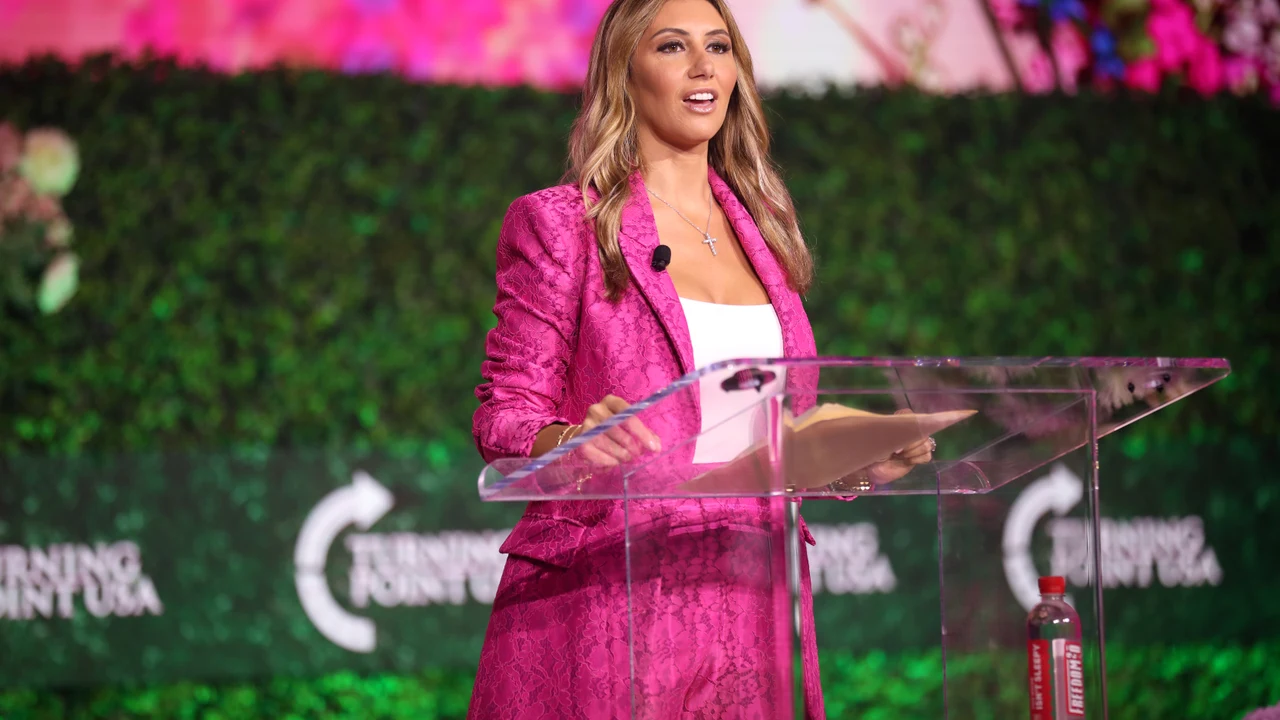
New Jersey’s Office of Attorney Ethics filed a disciplinary complaint alleging that Alina Habba violated conflict-of-interest and third-party-neutral rules while helping settle a young golf-club employee’s sexual-harassment claims. The November 10 filing says Habba acknowledged in a June 2026 interview that her actions violated both rules. That is the regulator’s pleaded account, not a final finding, and Habba’s lawyer says no court or tribunal has found wrongdoing.
The complaint says Alice Bianco had retained an employment lawyer after alleging harassment by a manager at Trump National Golf Club Bedminster. It alleges that Habba, after being contacted by the Trump Organization’s chief compliance officer, advised Bianco to stop answering her lawyer. Bianco’s lawyer then ended the representation, and Habba helped obtain a $15,000 settlement. The regulator says Habba did not tell Bianco or the club that she represented neither party or explain the difference between a neutral and a lawyer representing a client. It also alleges that the agreement threatened substantial monetary penalties for confidentiality breaches, contrary to New Jersey’s statutory ban on enforcing nondisclosure provisions in discrimination, retaliation and harassment settlements; that allegation is part of the regulator’s account of the settlement, not a separately charged ethics count.
The alleged conflict rests on a documented financial relationship, not merely Habba’s later political role. The complaint says Habba had paid the club more than $80,000 in dues and fees by July or August 2021, when the settlement was being negotiated, and more than $156,000 from January 2020 through January 2025. It alleges that her communications created an implied attorney-client relationship with Bianco while her financial interest in the club gave her divided loyalties. The filing characterizes the settlement as favorable to the club and unfavorable to Bianco.
The same filing records limits that cut against a broader political theory. The ethics office says it lacks clear-and-convincing evidence that Habba acted under a secret agreement with Donald Trump or the Trump Organization. Its review of business and trust records found no payment from Trump or the Trump Organization before September 2, 2021, after the August settlement. Investigators also said they could not prove that an earlier statement attributing Habba’s involvement to Trump, or later disavowals of that statement, was intentionally false.
A second count alleges failures to maintain required law-firm financial records, including client ledgers, account journals and reconciliations. But the complaint says Habba later remediated the deficiencies except for account designations she could no longer change after leaving the firm. The regulator still charged a recordkeeping violation under RPC 1.15(d).
Habba’s lawyer, Kim Ringler, told New Jersey Monitor that the complaint concerns conduct from more than five years ago and that no wrongdoing has been found. A special ethics adjudicator can hold a hearing and issue findings and a recommended sanction; the Disciplinary Review Board reviews the record de novo. The board can issue an admonition without Supreme Court review, while reprimand-or-greater discipline is embodied in a Supreme Court order, and only the court can disbar.
The accountability finding is narrower and more consequential than a claim of secret political direction. The regulator alleges that Habba’s paid club membership created a conflict that compromised duties to a 21-year-old worker who had already retained counsel, and that she facilitated a settlement on terms favorable to the club and unfavorable to Bianco. At the same time, the office says it could not establish a secret agreement with Trump or the Trump Organization by clear and convincing evidence and did not charge that theory. The next test is whether Habba’s answer and any hearing record support the alleged acknowledgment, implied representation and divided loyalty.
The evidence record
Source claimThe OAE filed a Nov. 10 complaint charging conflict and neutral-role violations and alleging a June 2026 acknowledgment; counsel says there has been no finding.
Article paragraph: 1
Source claimThe complaint alleges Habba advised Bianco to stop answering existing counsel, helped secure a $15,000 settlement, failed to explain her role and facilitated confidentiality penalties contrary to state law.
Article paragraph: 2
Source claimThe complaint records more than $80,000 in club payments by the 2021 settlement period and more than $156,000 through January 2025, and pleads an implied representation, divided loyalties and terms favoring the club.
Article paragraph: 3
Source claimThe OAE says it lacks clear proof of a secret Trump agreement, found no pre-Sept. 2 payment and could not prove intentional misrepresentation.
Article paragraph: 4
Source claimThe second count alleges recordkeeping violations while stating that later amended records fixed all but account designations.
Article paragraph: 5
Source claimHabba’s counsel says the complaint concerns old conduct and that there has been no finding of wrongdoing.
Article paragraph: 6
Source claimA special adjudicator can recommend discipline, the DRB reviews de novo and can impose an admonition, and greater discipline requires a Supreme Court order.
Article paragraph: 6
AnalysisPublic Rot identifies the complaint’s central accountability issue as alleged divided loyalty toward a worker while preserving the regulator’s inability to establish a secret-agreement theory by the required standard.
Article paragraph: 7
The complaint pleads a financial interest, an implied attorney-client relationship, conduct that allegedly left Bianco without counsel, and terms favorable to the club; its own footnote says the secret-agreement theory could not be established by clear and convincing evidence and was not charged. The paragraph distinguishes those allegations and the unresolved answer and hearing questions.
Sources and access
Each source record identifies its reporting origin, access scope and the date we checked it.
Office of Attorney Ethics v. Alina Habba — Amended Complaint
New Jersey Office of Attorney Ethics via New Jersey Monitor · Checked November 11, 2026
- Recorded relationship
- original
- Origin
- New Jersey Office of Attorney Ethics
- Access
- Full text
- Locator
- Docket XIV-2023-0508E; complaint pp. 1–23, especially footnotes 2–3 and paragraphs 21, 34–37, 65–88
- Source publication
- November 10, 2026
Complete 132-page PDF mirror containing the 23-page amended complaint and exhibits. OCR was checked against the page images for the cited sections.
Ex-US attorney, Trump lawyer faces ethics complaint over sex harassment settlement
New Jersey Monitor · Checked November 11, 2026
- Recorded relationship
- original
- Origin
- New Jersey Monitor
- Access
- Full text
- Locator
- Published November 11, 2026 at 10:44 a.m.; paragraphs describing charges, counsel response and complaint link
- Source publication
- November 11, 2026
Independent statehouse reporting with a direct public mirror of the filing and an attributable response from Habba’s lawyer.
Trump ally Alina Habba Mildon faces New Jersey attorney ethics complaint
Reuters · Checked November 11, 2026
- Recorded relationship
- original
- Origin
- Reuters
- Access
- Full text
- Locator
- Published November 11, 2026 at 7:41 p.m. UTC; paragraphs on filing, response and discipline process
- Source publication
- November 11, 2026
Independent legal-industry report; complaint details were checked against the filing rather than treated as independent proof.
New Jersey Legal Resources: Attorney Ethics & Discipline
New Jersey State Library · Checked November 11, 2026
- Recorded relationship
- original
- Origin
- New Jersey State Library
- Access
- Full text
- Locator
- Attorney Ethics & Discipline section on public OAE complaint files, XIV docket numbers and formal complaint process
Official state research guide used to confirm the complaint-file and docket framework.
Disciplinary Review Board 2023 Annual Report
New Jersey Judiciary · Checked November 11, 2026
- Recorded relationship
- original
- Origin
- New Jersey Judiciary
- Access
- Full text
- Locator
- The Board’s Functions, pp. 4–5; The Supreme Court’s Actions, p. 12
- Source publication
- May 31, 2024
Official Judiciary report used for the de novo review, admonition, Supreme Court-order and disbarment process description.
Prepared with AI research and writing tools. Sources and evidence are listed below. Public Rot is responsible for the published account.
Revision record
Revision 1 · November 11, 2026
Initial publication.
These are the recorded publication notices. Open reader tools, full available revisions or report a possible error →