
Federal debt hit $40.2 trillion. GAO says the books are not the excuse.
The fresh audit says interest expense on publicly held debt nearly tripled in five years. The recurring accountability failure lies in revenue and spending choices, not Treasury bookkeeping.
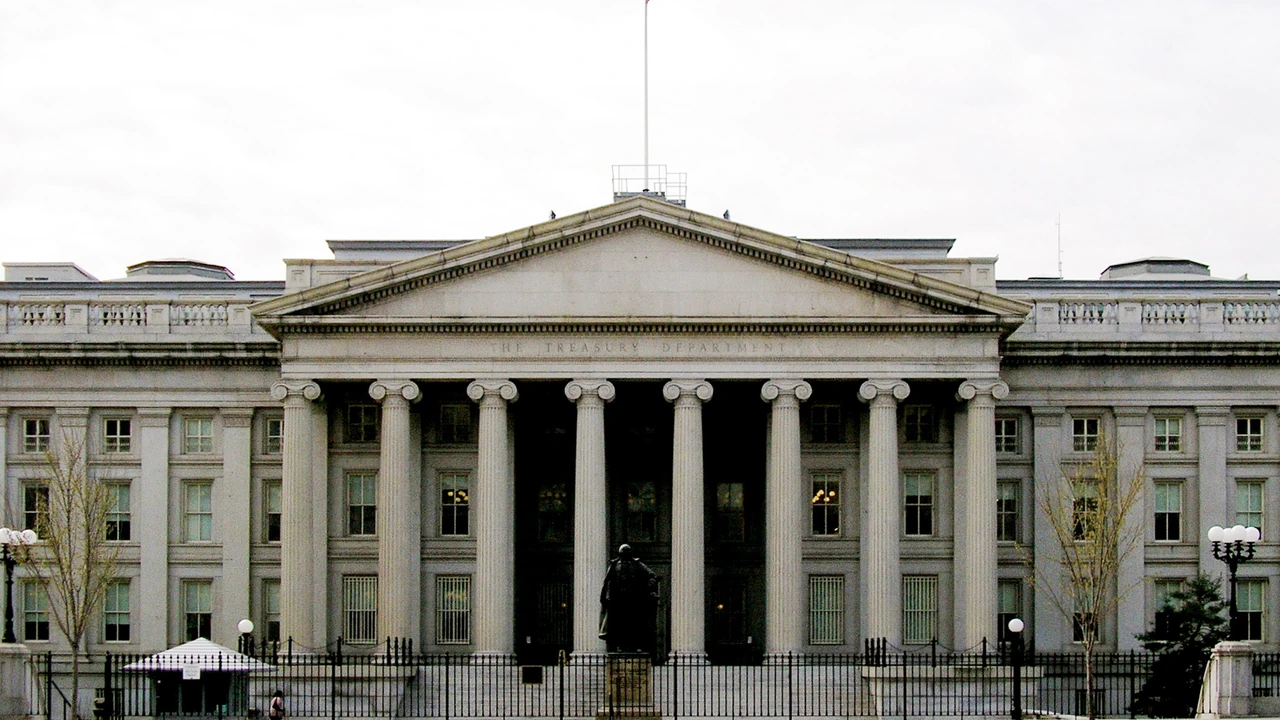
The Government Accountability Office released its annual federal-debt audit on November 9 with a number large enough to blur its parts: $40.2 trillion as of September 30. About $32.4 trillion was held by the public and $7.7 trillion was intragovernmental debt. Treating the entire total as money owed to outside investors would be wrong.
Total debt managed by the Bureau of the Fiscal Service rose about $2.5 trillion during fiscal 2026, including a roughly $2.1 trillion increase in debt held by the public. The federal budget deficit was $2.0 trillion, up from $1.8 trillion in fiscal 2025. Those measures are related but not interchangeable: publicly held debt also changes with Treasury cash balances and financing for federal direct-loan programs.
The audited schedule reports $1.385 trillion in total interest expense: about $1.112 trillion on debt held by the public and $273 billion on intragovernmental holdings. Interest on publicly held debt was $392 billion in fiscal 2021, meaning that component nearly tripled in five years. A larger debt stock and higher interest rates both drove the increase; rates also reflect Federal Reserve policy and wider economic and global conditions.
This was not an audit finding that the debt books are unreliable. GAO said the schedules were fairly presented and that relevant financial-reporting controls were effective in all material respects. Its selected tests found no reportable noncompliance. GAO did identify lesser control deficiencies, but none was classified as a material weakness or significant deficiency, and its testing did not cover every control or every law.
That clean accounting result sharpens the accountability question. The strongest supported criticism is not that Treasury lost track of trillions. It is that Congress and successive administrations enact revenue and spending choices that produce persistent deficits, then return to the debt total as though it appeared independently of those choices. Reliable books remove the bookkeeping-error excuse; they do not supply a fiscal strategy.
Congress and the president set tax and spending policy. Treasury finances the resulting borrowing needs. The statutory debt limit is an after-the-fact constraint on borrowing to meet obligations already created by law, not authority for new spending. Separating the debt-limit confrontation from the decisions that generate debt lets officials stage a recurring crisis after the bill has already been incurred.
Debt subject to the limit passed $40 trillion on October 1 and was approaching the current $41.1 trillion ceiling when GAO published its audit. GAO has recommended that Congress connect debt-limit decisions to the tax and spending decisions that create borrowing needs, while preserving Treasury’s ability to meet existing obligations.
There is important contrary evidence against treating the audit as proof of an imminent financing crisis. Treasury continues to meet borrowing needs, and recent auctions have drawn broad demand. Its November estimates projected $618 billion in net marketable borrowing for October through December and $800 billion for January through March, but those financing estimates are not the same as the annual deficit or the change in total debt.
Borrowing can finance valuable public services, investment, emergency response and wars; the audit does not judge individual laws, apportion partisan blame or establish that every borrowed dollar was wasted. Its figures are nominal, and a federal government that issues currency is not a household. The evidence supports a structural accountability finding, not a household-budget analogy or a prediction of default.
The next test is observable. Congress and the administration should publish a combined revenue-and-spending plan showing how they would slow the debt and interest path, then reform the debt-limit process so lawmakers confront borrowing when they make fiscal choices. Another clean audit followed by another detached ceiling fight would document the same failure again.
The evidence record
Source claimGAO published the audit Nov. 9 and reports $40.2T total debt, comprising about $32.4T held by the public and $7.7T intragovernmental.
Article paragraph: 1
Source claimTotal debt rose about $2.5T, publicly held debt about $2.1T, while the FY2026 deficit was $2.0T and the difference reflects other financing factors.
Article paragraph: 2
Source claimTotal interest expense was $1.385T, including $1.112T on publicly held debt and $273B intragovernmental; the public component nearly tripled from $392B in FY2021.
Article paragraph: 3
Source claimGAO found the schedules fairly presented, relevant controls effective in all material respects and no reportable selected noncompliance, while noting lesser deficiencies and audit-scope limits.
Article paragraph: 4
AnalysisReliable audited records make the recurring revenue-and-spending choices, rather than bookkeeping error, the central accountability question.
Article paragraph: 5
GAO’s clean audit conclusions coexist with the audited debt, deficit and interest increases; the paragraph does not allege fraud or accounting failure.
Source claimCongress and the president set fiscal policy, Treasury finances resulting needs, and the debt limit constrains payment of existing obligations rather than authorizing new spending.
Article paragraphs: 6, 7
Source claimTreasury projected $618B and $800B in net marketable borrowing and reported functioning market demand; these are financing estimates, not the deficit.
Article paragraph: 8
Source claimThe audit does not judge individual laws, assign partisan blame or prove imminent insolvency.
Article paragraph: 9
AnalysisA combined fiscal plan and a debt-limit process tied to policy choices are observable next accountability tests.
Article paragraph: 10
GAO recommends linking debt-limit decisions to revenue and spending decisions; the proposed disclosure test follows from the audit’s documented trajectory and preserves policy choice.
Sources and access
Each source record identifies its reporting origin, access scope and the date we checked it.
Financial Audit: Bureau of the Fiscal Service’s FY 2026 and FY 2025 Schedules of Federal Debt
U.S. Government Accountability Office · Checked November 10, 2026
- Recorded relationship
- original
- Origin
- U.S. Government Accountability Office
- Access
- Full text
- Locator
- Publication and public-release dates; highlights; report and recommendations links.
- Source publication
- November 9, 2026
Primary fresh hook and official audit summary.
Bureau of the Fiscal Service’s FY 2026 and FY 2025 Schedules of Federal Debt
U.S. Government Accountability Office · Checked November 10, 2026
- Recorded relationship
- original
- Origin
- U.S. Government Accountability Office
- Access
- Full text
- Locator
- Independent auditor’s report; Schedules of Federal Debt; Notes 2–4; internal-control and compliance sections.
- Source publication
- November 9, 2026
Signed full audit report and audited figures.
The Nation’s Fiscal Health: Strategy Needed as Debt Levels Accelerate
U.S. Government Accountability Office · Checked November 10, 2026
- Recorded relationship
- original
- Origin
- U.S. Government Accountability Office
- Access
- Full text
- Locator
- Debt-limit discussion and matters for congressional consideration.
- Source publication
- March 31, 2026
Primary background on the debt limit and fiscal-policy responsibility.
Treasury Announces Marketable Borrowing Estimates
U.S. Department of the Treasury · Checked November 10, 2026
- Recorded relationship
- original
- Origin
- U.S. Department of the Treasury
- Access
- Full text
- Locator
- October–December 2026 and January–March 2027 net marketable borrowing estimates.
- Source publication
- November 2, 2026
Primary financing context; not used as a substitute for deficit or debt-growth figures.
Report to the Secretary of the Treasury from the Treasury Borrowing Advisory Committee
U.S. Department of the Treasury · Checked November 10, 2026
- Recorded relationship
- original
- Origin
- U.S. Department of the Treasury
- Access
- Full text
- Locator
- Auction-demand, interest-rate and market context.
- Source publication
- November 4, 2026
Primary market context and contrary evidence.
US Treasury Building
Wikimedia Commons / Loren · Checked November 10, 2026
- Recorded relationship
- original
- Origin
- Wikimedia Commons / Loren
- Access
- Full text
- Locator
- File description, date, author and public-domain dedication.
- Source publication
- March 27, 2007
Visual source only; archival documentary photograph.

Prepared with AI research and writing tools. Sources and evidence are listed below. Public Rot is responsible for the published account.
Revision record
Revision 1 · November 10, 2026
Initial publication.
These are the recorded publication notices. Open reader tools, full available revisions or report a possible error →