
Burgum’s retained tech funds test the ethics safeguard behind the public-land AI push
Interior deemed divestiture of listed retained interests unnecessary at the time, relying on matter-specific recusals. A new disclosure report raises a harder question: how does that safeguard work for an administration-wide agenda?
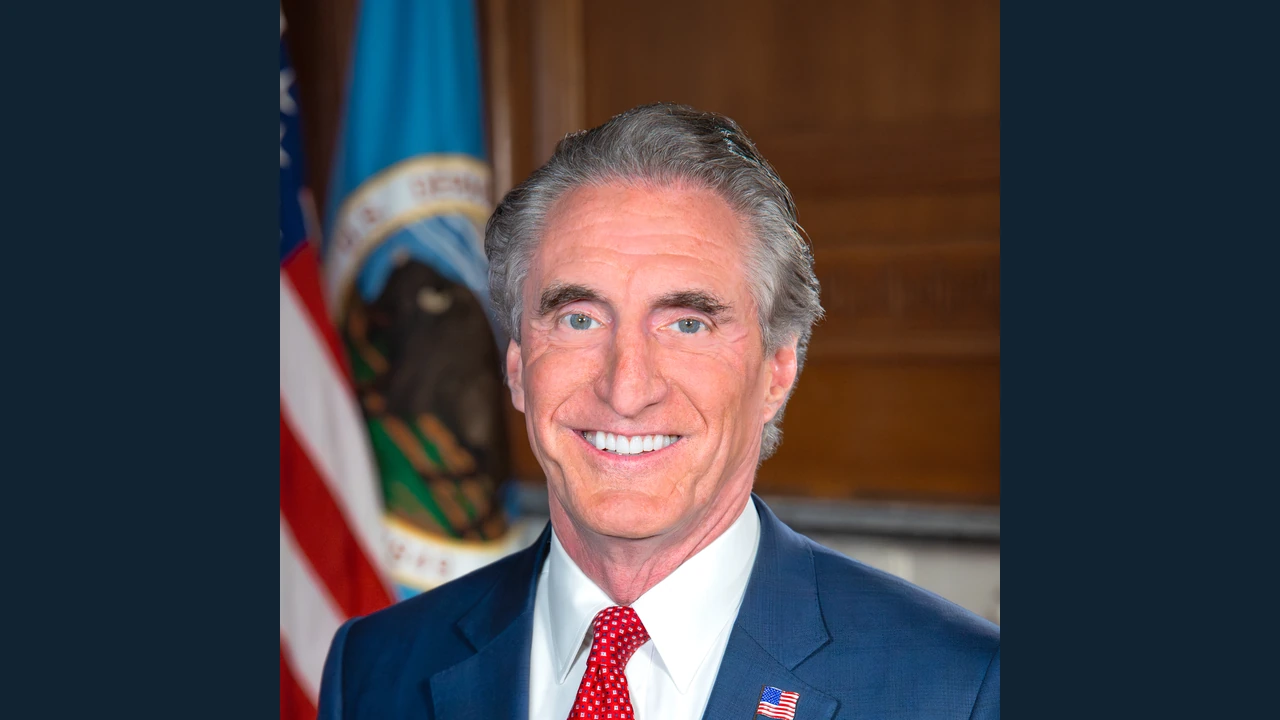
On November 6, ProPublica reported that Interior Secretary Doug Burgum’s 2026 disclosure shows extensive retained Arthur Ventures interests while he helps lead the administration’s AI-infrastructure push. His ethics agreement relies on recusal from particular conflicting matters rather than divestiture of the listed Arthur interests. But the cited public records do not disclose which AI or data-center matters, if any, he has been screened from, so the public cannot independently test how that safeguard has operated.
ProPublica reported that an analysis by the advocacy group Save Our Parks classified between $18.1 million and $64.4 million of the underlying investments as AI companies. Those are broad government reporting bands, not exact values. Public Rot did not obtain the group’s company-by-company worksheet, so the AI total remains an attributed analysis rather than an independently reproduced sum. The estimate does not establish that any holding would benefit from a federal-land data-center decision.
The underlying governance choice is public. Burgum’s January 2025 ethics agreement required him to resign from management positions but allowed him to keep Arthur Ventures and related interests. For Arthur Ventures LLP and the listed management entities, he promised not to participate personally and substantially in a particular matter that he knew would directly and predictably affect the entity or its underlying holdings, absent a written waiver; some provisions also allow a regulatory exemption. Section 8 separately lists the retained Arthur fund interests and says Interior deemed divestiture unnecessary 'at this time' because recusal from conflicting particular matters would not substantially limit his essential duties. For those listed interests, the agreement permits a written waiver or regulatory exemption.
That arrangement was narrower than full divestiture. The agreement separately required Burgum to sell direct holdings in Meta, Alphabet, Apple, Microsoft, Atlassian and other companies. It allowed passive interests in multiple Arthur funds to remain. The distinction matters because an official can comply with a matter-specific criminal conflict rule while still creating a reasonable public question about a broad industry agenda.
Burgum’s current duties are broad. President Donald Trump made the Interior secretary chair of the National Energy Dominance Council, which advises on faster energy production, infrastructure approvals and private investment. A July 2025 executive order directed agencies to accelerate permits for qualifying data centers and authorized the Interior secretary to help designate qualifying projects and identify federal sites.
The public-land program is no longer hypothetical. On November 6, Senate Energy Committee ranking member Martin Heinrich demanded that the Bureau of Land Management disclose every authority it is using, every data-center proposal it is considering and every tract identified as eligible. His letter said BLM had approved an 88-acre Nevada project in June before an Interior appeals board paused it over the environmental review, and cited reporting that at least 15 proposals or related projects span more than 17,000 acres in six Western states.
The strongest criticism is therefore about the safeguard, not a proven payoff. A recusal system can work only if ethics officials identify which decisions, meetings and recommendations count as particular matters affecting the retained funds. The cited public records do not show how Interior screened Burgum’s work on site identification, permitting policy or meetings with data-center and technology companies, or whether any recusal, waiver or regulatory exemption applied.
The contrary evidence is material. Interior told ProPublica that Burgum has met his ethics and disclosure obligations and called suggestions that investments drive his decisions false and unsupported. ProPublica said several ethics specialists considered the holdings permissible under the criminal conflict statute. Public Rot found no evidence that an Arthur portfolio company has a BLM data-center application, that Burgum personally approved the paused Nevada permit, or that he violated 18 U.S.C. §208.
The policy stakes still belong to the public. Developers can gain access to federal land and faster permitting; communities can bear demands on electricity, water, habitat and public access. Interior told ProPublica that data centers would generally pay annual fair-market-value rent, but project terms and public returns remain unresolved. Heinrich’s letter asks for the project list and legal rationale needed to evaluate those tradeoffs.
The accountability test is straightforward. Interior should make clear which AI and data-center matters Burgum has been screened from, what ethics advice governs broad policy work, whether any waivers or regulatory exemptions exist, and which companies stand behind the pending projects. Compliance cannot be independently assessed from a promise to recuse when the screening decisions and project relationships remain out of public view.
The evidence record
Source claimA Nov. 6 investigation newly reported Burgum’s retained venture interests and an attributed AI-linked valuation range.
Article paragraphs: 1, 2
AnalysisThe AI-linked valuation range is an attributed third-party classification using broad disclosure bands, not an independently reproduced exact total.
Article paragraph: 2
ProPublica attributes the estimate to Save Our Parks and explains the valuation bands; Public Rot did not obtain the underlying worksheet.
Source claimBurgum’s ethics agreement allowed retained Arthur interests and relied on particular-matter recusals, while separately requiring direct-stock divestitures.
Article paragraphs: 3, 4
AnalysisThe retained-interest arrangement creates a transparency and appearance question distinct from proving a criminal conflict.
Article paragraphs: 4, 7, 10
The ethics agreement’s matter-specific recusal design is compared with Burgum’s cross-cutting policy role. The article expressly preserves the criminal standard and absence of a proven violation.
Source claimBurgum chairs the National Energy Dominance Council and the council has broad energy, permitting and investment functions.
Article paragraph: 5
Source claimEO 14318 accelerates data-center permitting and gives Interior roles in project designation and federal-site identification.
Article paragraph: 5
Source claimHeinrich’s Nov. 6 letter sought project, authority and land lists and described the Nevada project and broader acreage.
Article paragraphs: 6, 9
AnalysisPublicly available records reviewed here do not show how Interior applied screening or recusals to Burgum’s broad AI/data-center work.
Article paragraphs: 7, 10
The ethics agreement defines the safeguard, while the reviewed disclosure, orders, Interior response and Senate letter do not publish matter-by-matter screening, recusal or waiver records.
Source claimInterior denies investment-driven decision-making; consulted experts viewed the holdings as permissible under the criminal statute.
Article paragraph: 8
AnalysisNo reviewed source establishes a direct Arthur-project link, Burgum’s personal permit intervention or a Section 208 violation.
Article paragraph: 8
Explicit negative-scope statement based on the reviewed source set; it limits the article’s conclusion rather than asserting universal nonexistence.
AnalysisPublic-land data-center policy distributes potential benefits and environmental/resource costs while project terms remain incomplete.
Article paragraph: 9
Synthesis of the executive orders, ProPublica’s project/rent reporting and the Senate’s requests; no quantified causal impact is asserted.
Sources and access
Each source record identifies its reporting origin, access scope and the date we checked it.
Trump Official Who Wants Data Centers on Public Lands Has Tens of Millions Invested in AI Industry
ProPublica · Checked November 7, 2026
- Recorded relationship
- original
- Origin
- ProPublica
- Access
- Full text
- Locator
- Nov. 6 report; disclosure analysis, Interior response, ethics-expert assessment, project counts and rent discussion.
- Source publication
- November 6, 2026
The AI-linked range is ProPublica’s report of Save Our Parks’ analysis; the advocacy group’s worksheet was not obtained.
Doug Burgum financial-disclosure profile
ProPublica Trump Team Financials · Checked November 7, 2026
- Recorded relationship
- derived
- Origin
- U.S. Office of Government Ethics
- Access
- Full text
- Locator
- Parsed roles, assets, values and transactions; documents list and methodology.
Database parses public financial disclosures. The cited origin URL is an accessible OGE transaction report; the native 2026 annual PDF was not separately obtained.
Doug Burgum ethics agreement
U.S. Department of the Interior ethics agreement mirrored by North Dakota Monitor · Checked November 7, 2026
- Recorded relationship
- unestablished
- Origin
- Not established
- Access
- Full text
- Locator
- Sections 2–3 on passive interests and underlying holdings; Section 6 divestitures; Section 8 retained interests and recusal rationale.
- Source publication
- January 13, 2025
Signed ethics agreement read from a public mirror; the text says it would also be posted by OGE.
Establishing the National Energy Dominance Council
The White House · Checked November 7, 2026
- Recorded relationship
- original
- Origin
- The White House
- Access
- Full text
- Locator
- Executive Order 14213, sections establishing Burgum as chair and council functions.
- Source publication
- February 14, 2025
Accelerating Federal Permitting of Data Center Infrastructure
The White House · Checked November 7, 2026
- Recorded relationship
- original
- Origin
- The White House
- Access
- Full text
- Locator
- Executive Order 14318; definitions, qualifying-project designation, federal-site identification and permitting sections.
- Source publication
- July 23, 2025
Heinrich demands answers on data centers on public lands
U.S. Senate Committee on Energy and Natural Resources · Checked November 7, 2026
- Recorded relationship
- original
- Origin
- U.S. Senate Committee on Energy and Natural Resources
- Access
- Full text
- Locator
- Nov. 6 letter and release; project history, environmental-review dispute and three disclosure requests.
- Source publication
- November 6, 2026
Prepared with AI research and writing tools. Sources and evidence are listed below. Public Rot is responsible for the published account.
Revision record
Revision 1 · November 7, 2026
Initial publication.
These are the recorded publication notices. Open reader tools, full available revisions or report a possible error →