
Supreme Court lets Big Bend work resume before waiver legality is decided
The justices stayed an injunction on jurisdictional grounds—not the merits—shifting the risk of delay from the government to residents and landscapes while review continues.
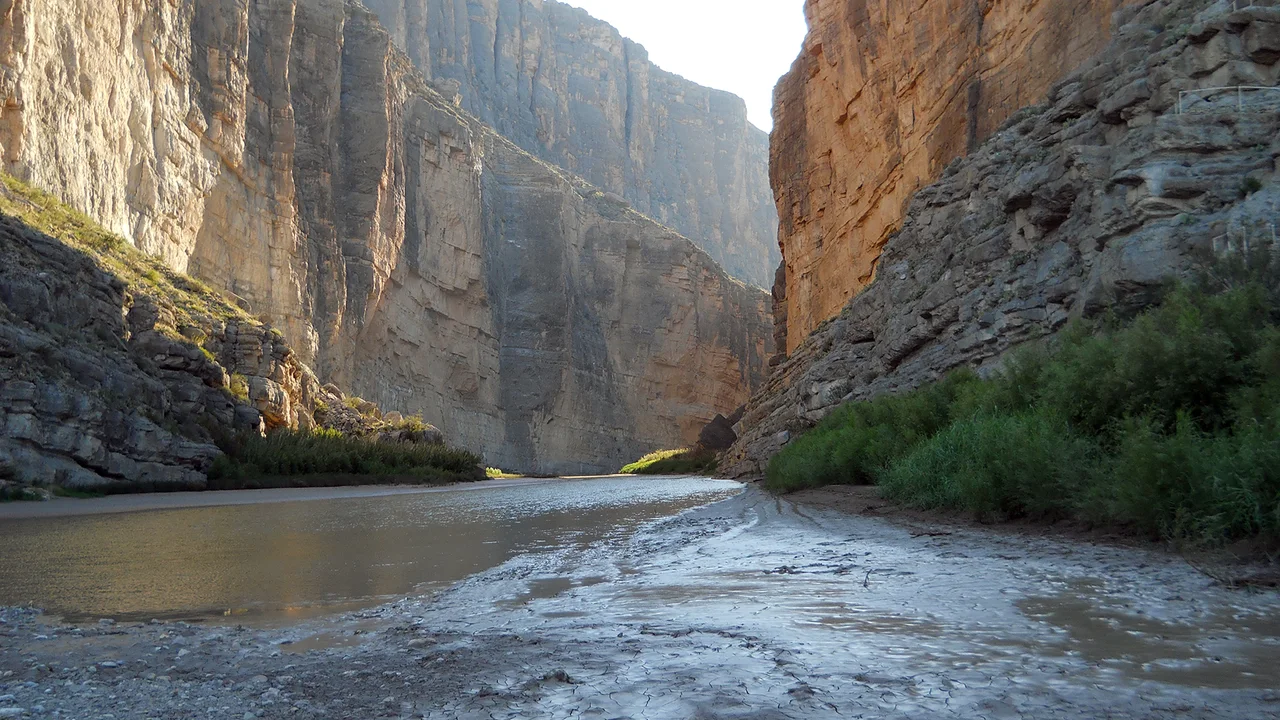
The Supreme Court cleared the Trump administration to resume border-barrier and road construction across Texas’s Big Bend sector Monday, even though the legality of the environmental-law waivers behind the projects remains unresolved. The unsigned order stayed a lower-court injunction on jurisdictional grounds; it did not uphold the waivers on their merits.
The Court said the government was “exceedingly likely” to show that the district judge lacked jurisdiction. Federal law allows challenges to the secretary’s waiver decisions only for constitutional violations. The justices treated the challengers’ major-questions argument as a claim that the secretary exceeded statutory authority, not as a constitutional claim.
That distinction changes who bears the risk while the case continues. The stay lasts while the government timely seeks Supreme Court review: it ends automatically if certiorari is denied, and if review is granted it lasts until the Court sends down judgment. Justice Ketanji Brown Jackson was recorded as the sole justice who would have denied the stay.
The majority credited the government’s border-security interest and a Customs and Border Protection declaration asserting that the injunction was causing nearly $500,000 a day in unrecoverable costs. It also said Congress had already preferred expeditious border construction over the aesthetic, recreational and environmental harms asserted by the challengers.
The government’s application reported more than 89,000 apprehensions in the Big Bend sector from fiscal 2021 through 2025 and substantial sectorwide drug seizures. It argues that gaps can funnel crossings toward unfinished areas. CBP says it does not plan 30-foot steel-bollard walls inside Big Bend National Park, Big Bend Ranch State Park or Black Gap Wildlife Management Area; it describes technology and limited low-profile vehicle barriers there, with National Park Service coordination and resource reviews.
Those sectorwide numbers do not establish the need at each proposed construction site. The district court found Big Bend had the lowest total apprehensions and lowest apprehensions per border mile along the southern border. The challengers argued that the totals include checkpoint, interior and asylum-related apprehensions and that some drug seizures occurred away from the planned alignments.
The lower-court record identified concrete stakes: a river guide said barriers could impede boat-tour launches; a rancher said construction could cut land off from Rio Grande water used for crops; and witnesses described risks to wildlife access, riparian soil, vegetation and cultural resources. The challengers said some damage cannot be restored once construction occurs.
The accountability question is therefore larger than whether the executive may ultimately win on jurisdiction. Congress created a sweeping waiver and review-limiting system, and the administration invoked it across a 517-mile sector. Monday’s order permits potentially irreversible work before a court finally resolves whether the waivers were lawful.
The next test is disclosure. CBP has not publicly confirmed in the reviewed record that construction has restarted after the order. Before ground is disturbed again, the government should disclose exact alignments, project types, restart dates, contractor-delay calculations, site-specific security evidence and binding mitigation measures so the public can judge which costs are being shifted and where.
The evidence record
Source claimThe Nov. 9 order stayed the injunction on jurisdictional grounds without deciding ultimate waiver legality.
Article paragraphs: 1, 2
Source claimThe stay duration and Jackson’s position are stated on the official docket.
Article paragraph: 3
Source claimThe Court credited security interests, attributed nearly $500,000 daily costs to CBP and relied on Congress’s balance of harms.
Article paragraph: 4
Source claimThe government’s application supplies sectorwide apprehension/seizure figures and its funnel-point case; CBP distinguishes park-area barrier types.
Article paragraph: 5
Source claimDistrict and opposition records provide counterevidence about the sectorwide figures and site relevance.
Article paragraph: 6
Source claimThe lower-court record describes river, ranch, wildlife, soil, vegetation and cultural-resource harms.
Article paragraph: 7
AnalysisThe order shifts interim risk under Congress’s waiver and jurisdiction regime before final legality is resolved.
Article paragraph: 8
This synthesis compares the order’s jurisdiction holding and balance of equities with the district record’s evidence of potentially irreversible harms; it does not predict the merits.
AnalysisDisclosure of site-specific alignments, timing, costs, evidence and mitigation is the next accountability test; restart was not confirmed in reviewed sources.
Article paragraph: 9
The listed official records describe broad sector plans, attributed costs and asserted harms but do not provide a post-order restart confirmation or a complete parcel-level public record.
Sources and access
Each source record identifies its reporting origin, access scope and the date we checked it.
Mullin v. Friends of the Ruidosa Church, No. 26A560, slip opinion
Supreme Court of the United States · Checked November 9, 2026
- Recorded relationship
- original
- Origin
- Supreme Court of the United States
- Access
- Full text
- Locator
- Pages 1–4, especially jurisdiction, irreparable harm, equities and stay order.
- Source publication
- November 9, 2026
Official slip opinion.
Docket for 26A560
Supreme Court of the United States · Checked November 9, 2026
- Recorded relationship
- original
- Origin
- Supreme Court of the United States
- Access
- Full text
- Locator
- Nov. 9 docket entries stating duration and Justice Jackson’s position.
- Source publication
- November 9, 2026
Official docket.
Memorandum opinion, Friends of the Ruidosa Church v. Mullin
U.S. District Court for the Western District of Texas / GovInfo · Checked November 9, 2026
- Recorded relationship
- original
- Origin
- U.S. District Court for the Western District of Texas
- Access
- Full text
- Locator
- Pages 1–14; factual background, sector evidence, jurisdiction analysis and irreparable harms.
- Source publication
- October 14, 2026
Official federal court opinion via GovInfo.
Application for a stay in No. 26A560
U.S. Department of Justice · Checked November 9, 2026
- Recorded relationship
- original
- Origin
- U.S. Department of Justice
- Access
- Full text
- Locator
- Pages 3–5 and 28–31; project, apprehension/seizure figures, security and cost arguments.
- Source publication
- October 21, 2026
Government filing; claims are attributed.
Opposition to application for a stay in No. 26A560
Friends of the Ruidosa Church et al. · Checked November 9, 2026
- Recorded relationship
- original
- Origin
- Friends of the Ruidosa Church et al.
- Access
- Full text
- Locator
- Pages 31–41; counterevidence, location limits and asserted irreversible harms.
- Source publication
- October 29, 2026
Respondents’ filing; claims are attributed and checked against the district opinion.
Smart Wall construction and Big Bend sector
U.S. Customs and Border Protection · Checked November 9, 2026
- Recorded relationship
- original
- Origin
- U.S. Customs and Border Protection
- Access
- Full text
- Locator
- Big Bend Sector and Environmental Stewardship sections; project table.
- Source publication
- November 9, 2026
Current agency description; page date is not used as the news hook.
Santa Elena Canyon
U.S. National Park Service · Checked November 9, 2026
- Recorded relationship
- original
- Origin
- U.S. National Park Service
- Access
- Full text
- Locator
- Asset metadata, credit, timestamp, location and public-domain granting rights.
- Source publication
- January 9, 2018
Visual source only; photograph taken Sept. 18, 2012 and labeled archival.
Prepared with AI research and writing tools. Sources and evidence are listed below. Public Rot is responsible for the published account.
Revision record
Revision 1 · November 9, 2026
Initial publication.
These are the recorded publication notices. Open reader tools, full available revisions or report a possible error →