
IRS Celebrated a Clean Audit. Its Tax-Accounting System Still Needed Manual Fixes.
GAO again issued unmodified opinions, but the linked report says IRS still uses a manual estimation process for a material share of tax receivables, within $518.5 billion in total unpaid assessments, and has no final date for a systems fix.
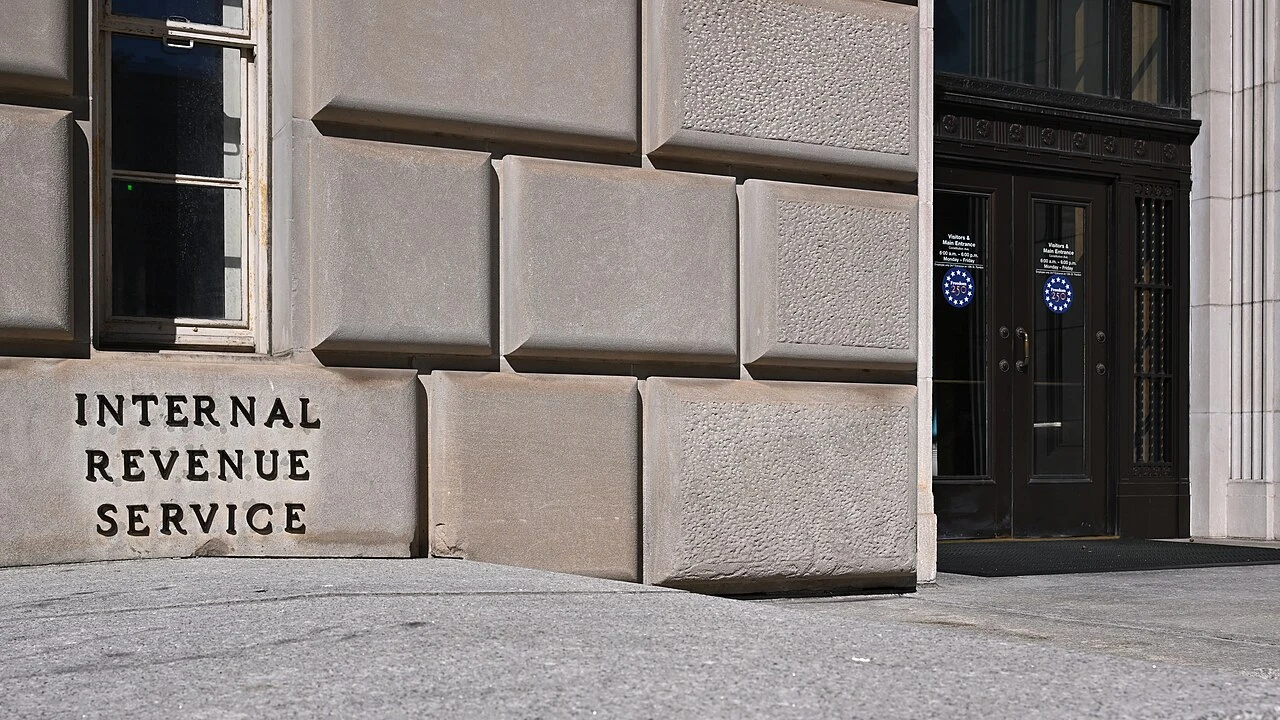
The IRS used a November 12 announcement to celebrate its 27th consecutive unmodified financial-statement audit opinions, call the fiscal 2026 report evidence of accountability and transparency, and highlight awards for the report. The announcement linked the full report but did not mention the continuing significant deficiency that GAO found in accounting for unpaid assessments.
That omission does not make the audit opinions unclean. GAO found the fiscal 2026 and 2025 statements fairly presented in all material respects, found internal control over financial reporting effective in all material respects and reported no instances of reportable noncompliance in the selected provisions it tested. A significant deficiency is less severe than a material weakness, and this one did not change the opinions.
The strongest criticism is about what appeared in the linked report but not in the celebratory summary. GAO said IRS systems still could not produce timely, reliable and complete transaction-level information needed to classify and report unpaid assessments. IRS continued to rely on a manually driven estimation process, and the agency recorded about $29.8 billion in summary-level adjustments to correct classification errors.
The $29.8 billion is not missing cash, fraud or a measure of the total deficiency. It is accounting adjustments for classification errors. The agency reported $518.548 billion in total unpaid assessments at September 30, 2026; that larger figure is the population that must be divided among reporting categories, not the amount misclassified and not the tax gap.
IRS’s own full report acknowledges that its financial-management systems did not substantially comply with federal systems requirements because of the unpaid-assessments deficiency. It also says the compensating estimation process produces reliable year-end balances, modernization work continues and no final implementation date has been determined.
GAO’s most recent detailed recommendation-status report, covering actions through September 30, 2025, said a 2018 recommendation to fix the system limitations and taxpayer-account errors remained open. That report does not establish the recommendation’s current fiscal 2026 status. The new audit says the underlying significant deficiency continued.
This is a bounded framing finding, not evidence of concealment: the IRS linked the report that disclosed the deficiency and included management’s response. But an agency announcement centered on excellence and accountability gave taxpayers an incomplete account of the control work still required while IRS reported collecting more than $5.5 trillion during the year.
IRS should publish the current status of the unpaid-assessments recommendation, the milestones for replacing the manual year-end process and a dated target for transaction-level reporting—or explain why it still cannot set one. Unmodified opinions answer whether the statements were fairly presented; they do not answer whether the systems can produce the information without the compensating procedures GAO says are still necessary.
The evidence record
AnalysisThe November 12 IRS announcement emphasized unmodified opinions, accountability, transparency and awards while omitting the continuing unpaid-assessments significant deficiency disclosed in the linked report.
Article paragraphs: 1, 7
Source claimGAO found the statements fairly presented, internal control effective in all material respects and no instances of reportable noncompliance in selected testing; the significant deficiency did not alter the opinions.
Article paragraph: 2
Source claimIRS systems lacked timely, reliable and complete transaction-level unpaid-assessment information, required a manual estimation process and recorded about $29.8 billion in summary classification adjustments.
Article paragraph: 3
Source claimThe $29.8 billion represents classification adjustments, while $518.548 billion is the broader total unpaid-assessments population rather than loss, fraud, the misclassified amount or the tax gap.
Article paragraph: 4
Source claimIRS acknowledged federal systems-requirement noncompliance tied to the deficiency, reliable year-end balances from compensating procedures, ongoing modernization and no final implementation date.
Article paragraph: 5
Source claimGAO reported recommendation 19-01 remained open as of September 30, 2025, while the new audit found the underlying significant deficiency continued in fiscal 2026.
Article paragraph: 6
AnalysisThe public-interest response is to disclose the current recommendation status and dated remediation milestones rather than treating unmodified opinions as proof that the system limitation is fixed.
Article paragraph: 8
Sources and access
Each source record identifies its reporting origin, access scope and the date we checked it.
IRS shares agency financial report for fiscal year 2026
Internal Revenue Service · Checked November 13, 2026
- Recorded relationship
- original
- Origin
- Internal Revenue Service
- Access
- Full text
- Locator
- November 12, 2026 announcement; opening paragraphs, accountability language, unmodified opinions, awards and link to full report
- Source publication
- November 12, 2026
Financial Audit: IRS’s FY 2026 and FY 2025 Financial Statements
U.S. Government Accountability Office · Checked November 13, 2026
- Recorded relationship
- original
- Origin
- U.S. Government Accountability Office
- Access
- Full text
- Locator
- Published and publicly released November 12, 2026; What GAO Found and report highlights
- Source publication
- November 12, 2026
IRS FY 2026 Agency Financial Report
Internal Revenue Service · Checked November 13, 2026
- Recorded relationship
- original
- Origin
- Internal Revenue Service
- Access
- Full text
- Locator
- Analysis of Systems, Controls, and Legal Compliance; Independent Auditor’s Report; IRS response; financial-statement notes on unpaid assessments
- Source publication
- November 12, 2026
IRS Financial Reporting: Improvements Needed in Information System and Other Controls
U.S. Government Accountability Office · Checked November 13, 2026
- Recorded relationship
- original
- Origin
- U.S. Government Accountability Office
- Access
- Full text
- Locator
- Recommendation-status table for recommendation 19-01; actions and status as of September 30, 2025
Prepared with AI research and writing tools. Sources and evidence are listed below. Public Rot is responsible for the published account.
Revision record
Revision 1 · November 13, 2026
Initial publication.
Revision 2 · November 14, 2026
Headline updated to emphasize the article’s supported finding; reporting and original publication date unchanged.
These are the recorded publication notices. Open reader tools, full available revisions or report a possible error →