
Fox now owns Roku. DOJ left the safeguards’ lifespan partly unclear.
Two of four public commitments have a three-year minimum. DOJ disclosed no duration for the other two—or how compliance will be monitored.
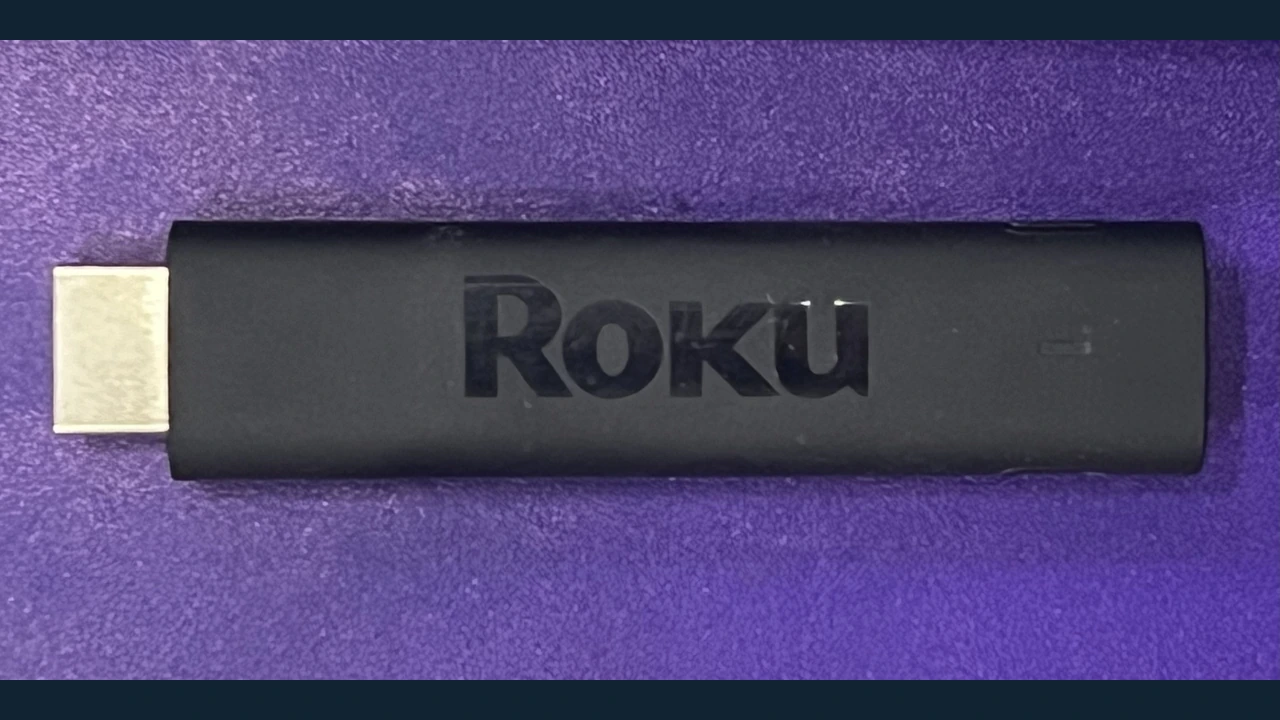
Fox completed its roughly $22 billion acquisition of Roku on November 6 after the Justice Department closed an antitrust investigation into the deal. DOJ said it examined whether the merger could reduce competition among free, ad-supported streaming services and whether Fox could use control of Roku’s television platform to disadvantage rival content.
The government allowed the combination to close after Fox made four commitments covering non-Fox content, search results, application placement, third-party data products and firewalls around competitively sensitive partner data. DOJ gave a minimum term of three years for non-Fox carriage and the data firewalls. Its public statement gave no duration for the search, home-screen or third-party data-product promises. The central accountability question is how every promise will be monitored and what restrains Fox when the timed protections expire.
DOJ concluded that new free, ad-supported streaming providers could enter quickly enough to make substantial competitive harm unlikely. It also reasoned that Roku needs a wide range of content to attract viewers, that discrimination would damage the merged company financially and reputationally, and that consumers could move to other connected-TV platforms if Roku deteriorated.
Those are material defenses of the decision. Fox’s own closing release says Roku will remain open to thousands of applications and channels across more than 100 million households worldwide. The company says choice is central to Roku’s value and that it will preserve the platform’s openness.
The conflict DOJ investigated is nevertheless built into the merged company. Fox now owns news, sports and entertainment programming; the Tubi streaming service; the Roku Channel; and the Roku operating system that controls search, home-screen placement and access to viewer and advertising data. DOJ did not invent that concern: its closing statement says the division specifically considered whether Fox could use Roku to harm content rivals.
Fox committed to carry non-Fox content consistent with Roku’s historical practice for at least three years. It said it would not discriminate against non-Fox content in search results and would continue letting users rearrange applications on the home screen. It also promised to provide data products to third parties on commercially reasonable terms consistent with Roku’s standard distribution agreement.
The fourth commitment covers commercially sensitive partner data. Fox said it would maintain existing contractual firewalls for at least three years around information that can be inferred or collected from non-Fox providers’ commercial activity, including click, search, viewing and voice data.
DOJ’s public statement does not identify a filed consent decree, an independent monitor, reporting requirements, penalties for breach or an automatic extension beyond the stated minimum. That absence does not prove the promises are unenforceable; contracts, antitrust law and other legal obligations can still matter. It does mean the public statement leaves unanswered how compliance will be tested and what changes after year three.
The transaction gives existing Fox shareholders about 74% of the combined company and former Roku shareholders about 26%, according to Fox’s closing announcement. Roku founder Anthony Wood joined Fox’s board and became co-chair of a digital-platforms division that includes Roku, Tubi and Fox One. Fox projects about $400 million in annual cost savings within two years, but that projection does not establish where cuts or efficiencies will occur.
The deal’s scale is not itself proof of consumer harm. Roku’s need for outside content and the existence of competing television platforms give Fox reasons not to degrade access. New services can also discipline prices and conduct. DOJ says it will keep evaluating the industry and may act if facts change.
But the approval transfers a major gateway into the hands of one of the companies whose content passes through it. A neutral-platform promise is most valuable when the public can see the rule, the duration and the enforcement mechanism. DOJ described the conduct, gave a three-year minimum for two commitments and disclosed no duration for the other two, while leaving the monitoring and post-commitment regime unclear.
That is the accountability test for the merger: whether non-Fox services remain visible on equal terms, whether partner data stays separated, whether users retain control of the home screen and whether regulators publish evidence of compliance. Fox’s incentive to keep Roku useful is real. So is the new power to shape what more than 100 million households can find and what the platform learns about them.
The evidence record
Source claimDOJ closed its merger investigation and Fox completed the acquisition on November 6 after review of streaming and vertical-platform risks.
Article paragraph: 1
AnalysisDOJ cited four Fox commitments, gave a three-year minimum for non-Fox carriage and data firewalls, and disclosed no duration for the other two; this creates the article's accountability question about monitoring and expiration.
Article paragraph: 2
The DOJ statement enumerates the four commitments and assigns an at-least-three-year term only to items 1 and 4; the question about monitoring and expiration is analysis bounded by paragraph 7's limits.
Source claimDOJ relied on provider entry, Roku's need for broad content, reputational and monetary incentives, and consumer switching to other platforms.
Article paragraph: 3
Source claimFox says Roku reaches more than 100 million households worldwide and that openness is central to the platform.
Article paragraph: 4
Source claimThe merged company combines Fox content, Tubi, Roku Channel and the Roku platform; DOJ expressly investigated possible discrimination against content rivals.
Article paragraph: 5
Source claimFox's content, search, placement and third-party data commitments are accurately summarized.
Article paragraph: 6
Source claimFox committed to maintain contractual firewalls for specified competitively sensitive partner data for at least three years.
Article paragraph: 7
AnalysisThe DOJ public statement does not describe a filed decree, monitor, reporting requirements, breach penalties or an automatic extension; the paragraph explicitly avoids concluding the promises are unenforceable.
Article paragraph: 8
Full-text review of the DOJ statement found none of those public mechanisms; absence is reported only for that statement, not the entire legal record.
Source claimFox reports the 74/26 ownership split, Anthony Wood's new roles and projected $400 million run-rate synergies.
Article paragraph: 9
AnalysisThe article retains DOJ and Fox's strongest defenses and does not treat scale as proof of harm.
Article paragraph: 10
Synthesis of DOJ's competitive analysis and Fox's stated platform incentives, with no claim of observed discrimination.
AnalysisThe public statement gives a three-year minimum for two commitments, no duration for the other two, and leaves monitoring and post-commitment treatment unclear.
Article paragraph: 11
Comparison of the four numbered commitments and their stated durations with the enforcement details absent from DOJ's public statement.
AnalysisThe closing transfers platform control to a content owner and supports ongoing tests of visibility, data separation, home-screen control and regulator transparency.
Article paragraph: 12
Accountability framework derived from the risks DOJ reviewed and the safeguards Fox offered; household reach is attributed and qualified.
Sources and access
Each source record identifies its reporting origin, access scope and the date we checked it.
Statement on closing the FOX-Roku merger investigation
U.S. Department of Justice, Antitrust Division · Checked November 7, 2026
- Recorded relationship
- original
- Origin
- U.S. Department of Justice, Antitrust Division
- Access
- Full text
- Locator
- November 6 dateline; investigation theories, conclusions and numbered commitments
- Source publication
- November 6, 2026
Fox Corporation completes acquisition of Roku
Fox Corporation · Checked November 7, 2026
- Recorded relationship
- original
- Origin
- Fox Corporation
- Access
- Full text
- Locator
- November 6 closing announcement, reach, governance, ownership and synergy sections
- Source publication
- November 6, 2026
Fox Form S-8 filed after the Roku acquisition
U.S. Securities and Exchange Commission · Checked November 7, 2026
- Recorded relationship
- original
- Origin
- Fox Corporation / SEC EDGAR
- Access
- Full text
- Locator
- Explanatory Note, merger completion and adjusted cash-and-stock consideration
- Source publication
- November 6, 2026
Roku Form 8-K reporting completion of the Fox acquisition
U.S. Securities and Exchange Commission · Checked November 7, 2026
- Recorded relationship
- original
- Origin
- Roku / SEC EDGAR
- Access
- Full text
- Locator
- Introductory Note and Item 2.01 merger completion and consideration
- Source publication
- November 6, 2026
Prepared with AI research and writing tools. Public Rot reviewed the cited government, company and securities records and is responsible for the published account.
Revision record
Revision 1 · November 7, 2026
Initial publication.
These are the recorded publication notices. Open reader tools, full available revisions or report a possible error →